Preserving the Dutch Spirit in Hong Kong
Could you please introduce yourself to us?
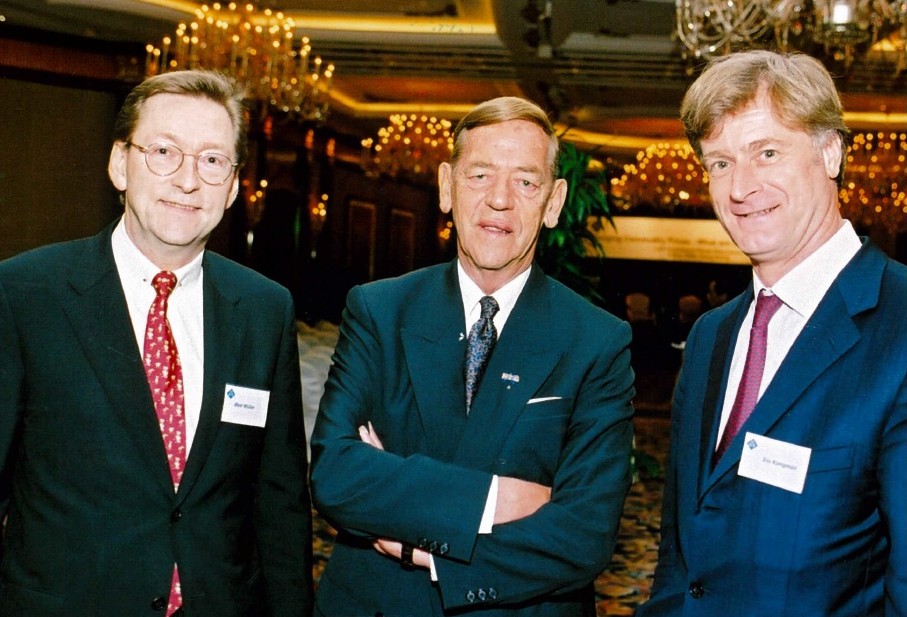
My name is Eric Kampman, I came here in 1995, and since then Hong Kong has really become home. I started out in commercial banking – one of the traditional professions in Hong Kong, where you were either a lawyer, a banker, or in a similar field. In 1999, I made an internal move from corporate banking into investment banking. The following years were challenging: the dot-com bubble had burst, 9/11 had shaken global markets, and overall sentiment was uncertain. At that time, I was asked to relocate to Amsterdam or London, but I chose to stay. I believed strongly that Asia was the future.
That decision led me to develop a business plan for Van Lanschot, a well-known Dutch private bank, to establish operations in Asia with Hong Kong as home base. It was approved by the regulators, the Dutch Central Bank and the HKMA in Hong Kong. The early days were not easy. In our very first year of operations, we were confronted with the SARS outbreak. The opening party had to be delayed and was eventually held a year later in the China Club. After a management change in the Netherlands, it was decided that the Hong Kong operation was too costly and I was tasked with overseeing its closure. During that period, I was already being approached by headhunters and joined LGT in 2004.
How did you first become involved with the Dutch Chamber?
My connection with the Dutch Chamber dates back to my ABN AMRO days, which started after the summer of 1995. Whenever you came to Hong Kong for the bank, it was almost expected that you would support the Chamber. I was very active for several years in the Chamber’s magazine, working every two weeks from the China Building, where the Dutch Consulate was based at the time. Cyril Durup was the editor, and I was involved as part of my personal role. Of course, this also provided some visibility for the bank, and it was a good way to build connections.
This period, roughly from 1995 to 1999, marked a time when I was deeply embedded in the Dutch business community. When my successor at ABN AMRO arrived in 1999, that chapter came to an end.
How would you describe the evolution of the Chamber over the years?
Hong Kong itself has changed significantly since I first arrived. Even in 1995, two years before the handover, you could already see that the city was becoming more and more Chinese. You noticed it in the MTR, in the advertising, and in the general atmosphere. The Chamber evolved alongside that. In the old days, there were many large China seminars, which were very popular and brought in good revenue. There were tables at these events, business lunches, and plenty of networking opportunities. That was all part of the Chamber’s identity.
Over the years, I think the Chamber has become more professional and more focused, which I see as a positive development. It also maintained a strong relationship with the Consulate General in those early years, although there was always a bit of finding each other and figuring out how much collaboration was really needed. As a small country, the Netherlands cannot compete with the scale of cultural and government support that countries like Germany or France can put behind their chambers abroad. So, you must be practical. You cannot do everything, and you certainly cannot compete on budget with some of the larger countries. But believe the Dutch Chamber has done well by being smart, active and efficient.
What are some of your favourite memories from the Dutch Chamber?
At times, the Chamber felt almost like a Dutch social club, and I mean that in the best possible way. One of the highlights was the celebration around the wedding of Máxima and Prince Willem-Alexander in 2002. We hosted a large event at the Aberdeen Marina Club, and that truly was a special occasion. It felt exciting and very connected to the Dutch community in Hong Kong at the time, which was something that felt even more meaningful in a time before instant digital communication.
Another memorable experience was when I sponsored Joep van ’t Hek to visit Asia. He travelled through Hong Kong, Beijing, and Shanghai, and I accompanied him to Beijing, where I had several prospects, particularly Dutch clients familiar with Van Lanschot. That trip demonstrated how the Chamber could go beyond social engagement and create genuine business opportunities. It culminated in a memorable evening in Beijing—one of those moments that has stayed with me ever since.
Where would you like to see the Chamber in the next 10 years?
I believe the Chamber should remain distinctly Dutch. While collaboration with other chambers can certainly be valuable, it is important to preserve a clear identity and continue offering events tailored specifically to the Dutch community. That sense of identity has always been one of its core strengths.
Maintaining a close relationship with the Consulate General is equally important, as it reinforces both credibility and impact.
At the same time, the Chamber must remain relevant in a changing city. Some Dutch companies have relocated their headquarters elsewhere, and many of the big Dutch businesses here are now managed by non-Dutch executives. As a result, the Chamber needs to think more broadly about its audience and relevance. Even so, I remain confident that it can continue to play a valuable role for Dutch business in Hong Kong and beyond, especially through networking, practical support and a strong sense of community.
Is there anything else you would like to add?
Hong Kong has been very good to me. I have built my career here, made a life here, and stayed because I believe the city still has a lot to offer. I’m also quite old-fashioned in some ways. I believe there is still real value in in-person interaction, rather than doing everything online. After COVID, too many things moved onto screens, and people became less comfortable with direct contact. But networking still matters, and face-to-face conversations remain essential.
My hope for the Chamber is simple: keep the Dutch spirit alive, keep creating opportunities for people to meet, and never lose the sense of community that has always defined it. That has always been the real strength of the Dutch Chamber in Hong Kong.