A New Approach to Talent Development
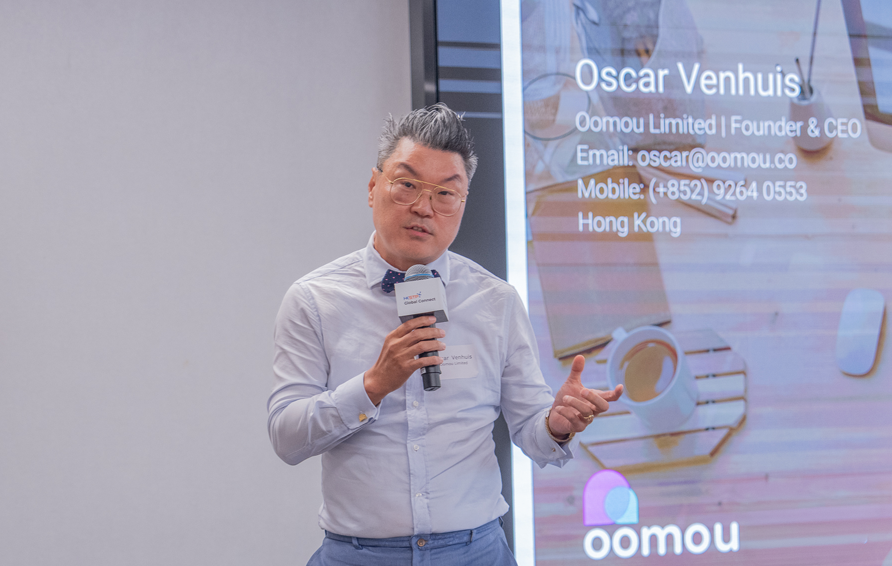
What brought you to Hong Kong, and how did you end up settling here after living in the Netherlands and the UK?
I was born in Seoul but grew up in the Netherlands, and later studied in both the Netherlands and the United Kingdom. My early career also took me across both countries, before my background in design began bringing me to Asia with frequent travel to South China, Vietnam, and other manufacturing hubs.
That is how I first came to Hong Kong. A few decades ago, the city was effectively the region’s manufacturing hub, so it naturally became a base for my work. At one point, I was here so often, pretty much every month, that I eventually decided to stay. Like many people, I initially came for work, but I stayed because it is an exceptionally easy place to settle. It is highly international and transient, which makes it straightforward to meet people with similar backgrounds. Combined with its convenience and connectivity, both socially and professionally, Hong Kong offered a unique environment that encouraged me to build a longer-term life here.
What was the pivotal moment that made you transition from corporate work to founding your own ventures like EQ Lab and theDesk?
A key turning point came around 2008, when I returned to Hong Kong to work on the merger of Mexx, Liz Claiborne, and Li & Fung. This coincided with the global financial crisis, which prompted a period of reflection. Although I had started my career in design, my role had gradually shifted towards supply chain optimisation and cost management.
While that work was valuable, I found myself increasingly distanced from the creative aspects that had originally motivated me. By around 2010, I decided to take a different path and started my first business. It was not immediately successful; my initial venture closed within two years, followed by another that proved difficult to scale. However, these experiences were instrumental in shaping my entrepreneurial journey.
The first significant success came with theDesk, a co-working business I co-founded in 2015. It was launched at a time when co-working was gaining momentum, and it continues to operate today, although I exited and stepped away from the business in 2023. Through this experience, I have developed a strong interest in community-building, which later evolved into the core of EQ Lab.
What is your startup Oomou about? Can you explain how it works and what problem it solves for career changers? (Why did you choose this project-based model instead of traditional courses, and what inspired this approach?)
Oomou was awarded a grant by the HKSTP and nominated by Animoca builds on the work I established through EQ Lab, where together with Dr Richard Claydon, we explored leadership, organisational design, and, importantly, the role of social skills in professional success. One of our key observations was that while technical knowledge is widely taught, social and interpersonal skills- such as communication, collaboration, and judgement - are often overlooked, despite being critical in the workplace.
Research has long shown that up to 85 per cent of professional success is driven by these skills, yet they remain difficult to assess and develop. Moreover, traditional methods, such as psychometric tests or classroom-based learning, are often static and lack context, because they do not capture how individuals actually behave in real-world situations.
Oomou addresses this by creating interactive, scenario-based environments, where users engage in simulated workplace situations in which context matters, rather than simply answering fixed questions. For example, the platform can assess how someone responds to interruptions, ambiguity, or differing perspectives, making the experience more dynamic and reflective of real interactions.
The platform focuses on two areas: assessment and development. It provides users with immediate, structured feedback and allows them to practise repeatedly, much like a companion. This project-based and experiential model was inspired by the limitations of traditional learning formats. Social intelligence cannot be easily acquired through theory alone; they require practice, reflection, and real-life interactions. By creating a system where individuals can actively engage and improve, Oomou aims to make these skills more accessible and scalable.
For career changers and existing employees in particular, this approach offers a more practical way to demonstrate and develop capabilities that are otherwise difficult to quantify. It can also help reduce bias in hiring by focusing more directly on how people respond and perform in realistic situations.
Where do you see Oomou in the next three to five years?
At present, we are in the production phase and preparing to launch our beta version this August 2026. Looking three to five years ahead is challenging, given the pace of technological change; our ambition is to establish Oomou as a widely used tool for both individuals and organisations.
The goal is to make social skills development more continuous and accessible, rather than something confined to occasional workshops. By providing immediate feedback and opportunities for repeated practice, we hope to support ongoing personal and professional development. Ultimately, I see Oomou evolving into a standard tool that complements traditional education and talent development.
What are your aspirations for the Dutch Chamber of Commerce in Hong Kong? How do you hope to involve or reconnect with the Chamber?
I recently rejoined the Dutch Chamber in connection with my new venture, having previously been a member for several years. My initial aim is to reconnect with the community, attend events, and engage with other entrepreneurs and professionals across different sectors.
In the past, I was involved in the Creative Committee, which focused on highlighting Hong Kong’s role within the creative industries - an area that is often inadvertently overlooked, despite the city’s global significance in the art market. I found that experience very valuable, and would be open to contributing again in a similar capacity.
For now, the priority is to become active again within the network. From there, I will explore where I can contribute most effectively, whether through committee involvement or by supporting the broader entrepreneurial ecosystem within the Dutch Chamber.
oscar@oomou.co