Maaike van Meer and Muriel Moorrees-Braat on Building Connections and Embracing Change
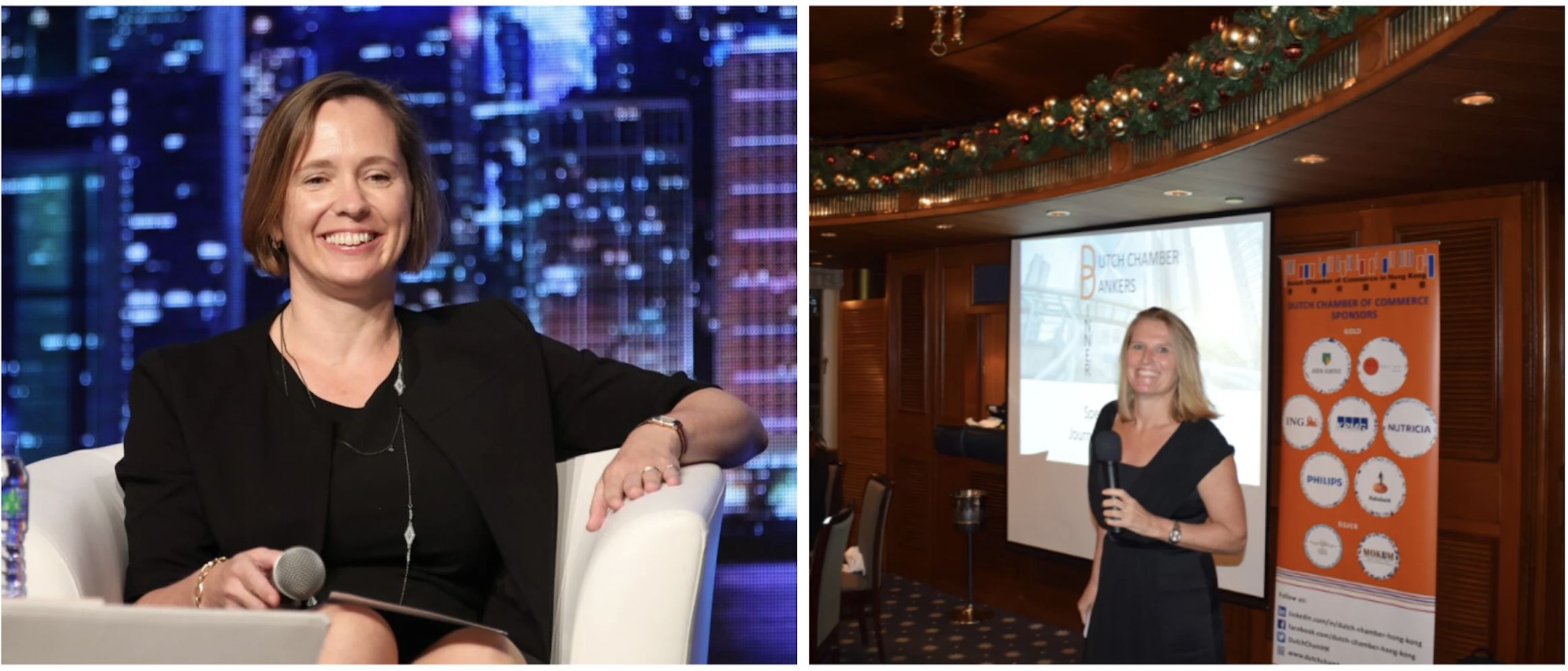
Could you both introduce yourselves and share how you became involved with the Dutch Chamber?
Maaike: I first became involved through ING’s corporate membership. One of my early initiatives was helping to establish Women in Business together with Jacqueline Baud, who was then the Dutch Chamber’s General Manager, and Henrike Hartemink. Our first event was held at ING’s offices.
In 2014, Jacqueline asked whether I would be interested in joining the Board. I said, “Yes, sure, why not?” Then I walked into my first Board meeting and thought, “Oh, this is different!” But I really enjoyed it because I felt I was giving something back to the community.
I initially chaired the PR and Publications Committee before becoming Chair of the Board in 2017. Later, when I moved to Australia, one of the first things I did was reach out to the Netherlands Chamber of Commerce community there, and I also became a Board member. Now that I am back in Hong Kong, I have rejoined as an individual member.
I like building things, and the Dutch Chamber has always been a meaningful way for me to contribute to the community.
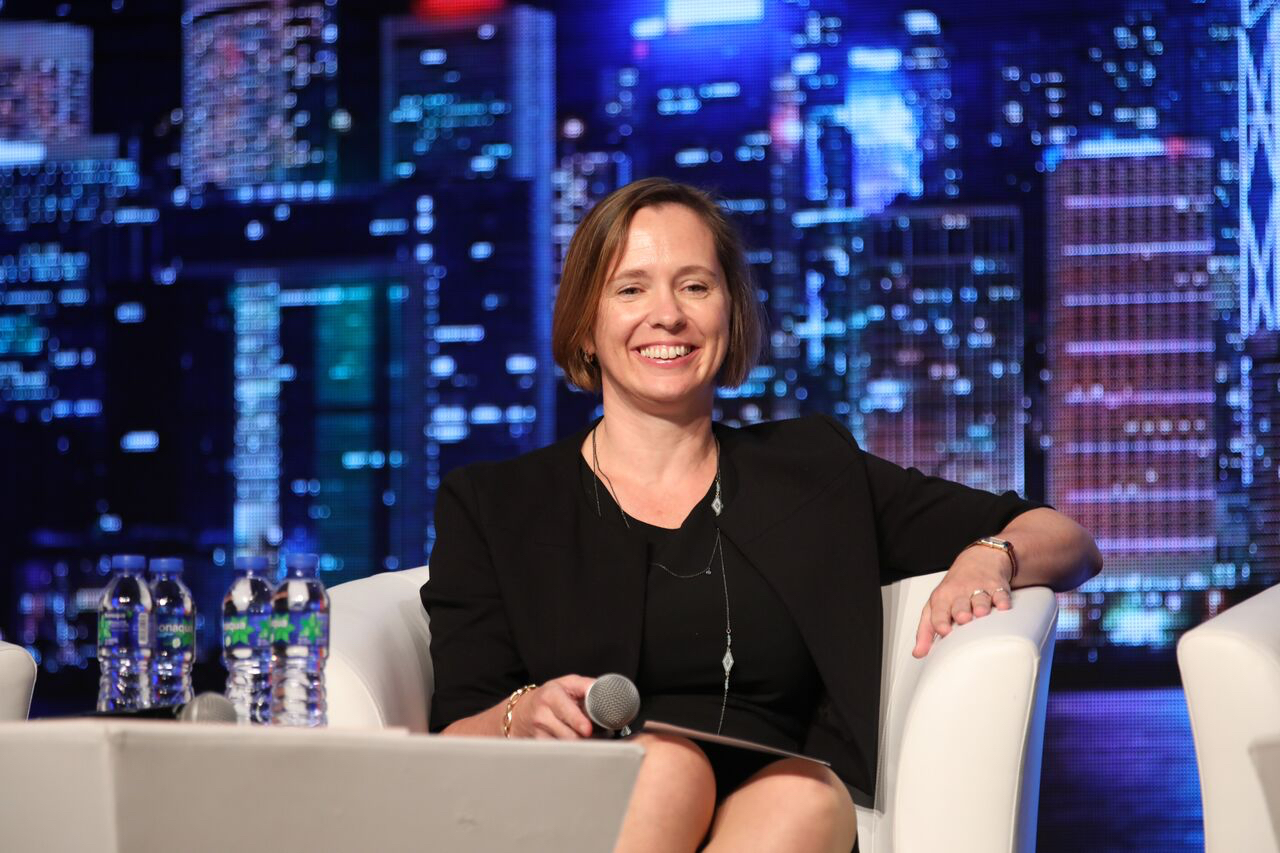
Muriel: My route was rather different. I moved to Hong Kong in 2014 with my family, following my husband’s work. We had previously lived in Indonesia and Tokyo, so I found myself having to reinvent myself once again.
I decided to try something completely different and became a real estate consultant. Through a Dutch colleague, I joined a sailing group, where I met Jacqueline. She would talk about her work at the Dutch Chamber, and it sounded so interesting. Of course, the position was already taken by her!
When she announced that she was leaving in 2017, I applied straight away. That was when my real involvement with the Dutch Chamber began, and I remained General Manager until 2021 when I moved back to the Netherlands.
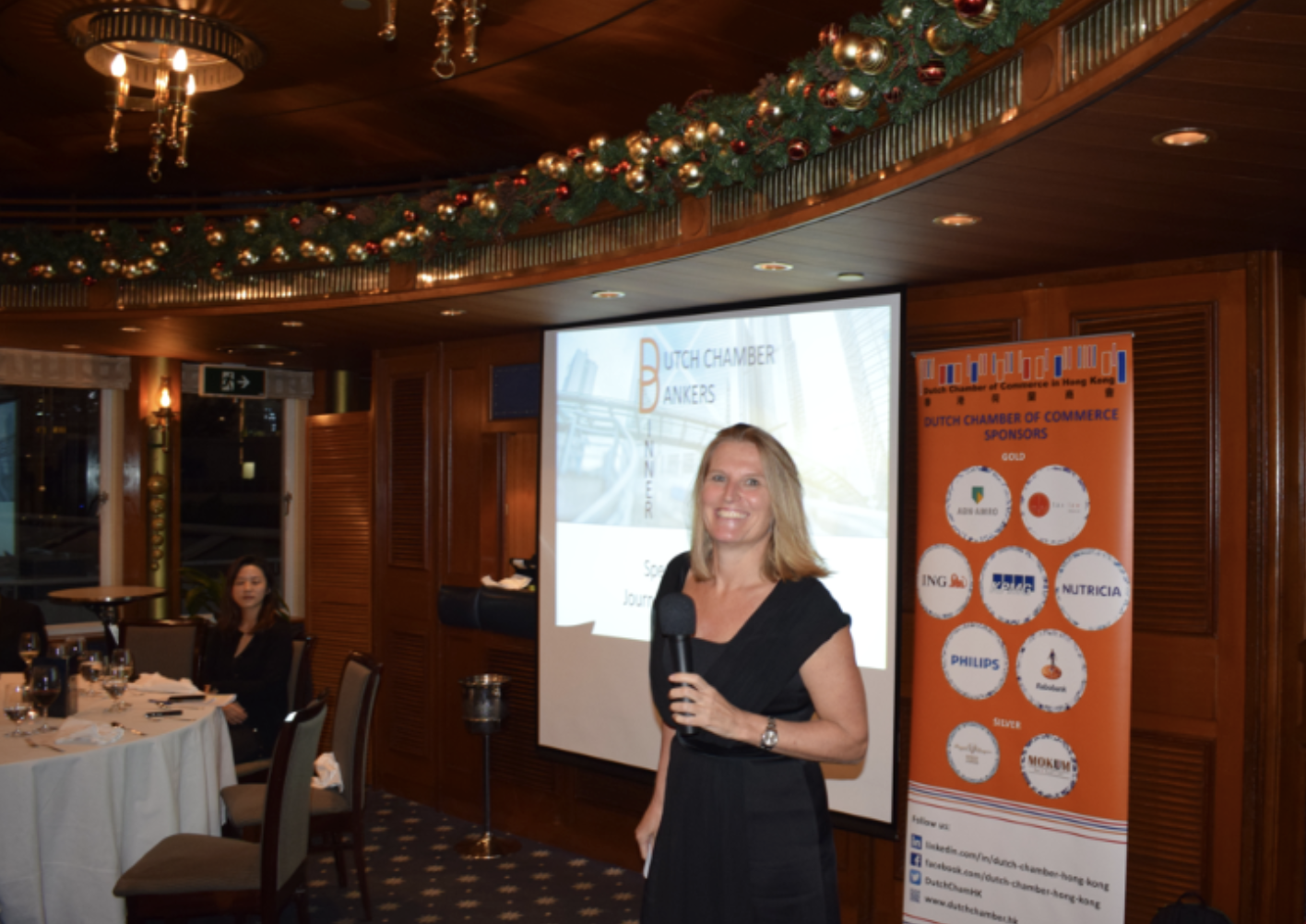
When you took on your respective roles, what were your main priorities for the Dutch Chamber?
Maaike: As Chair, one of my main priorities was maintaining and growing the membership, particularly our Gold Memberships and sponsorships. Governance was another important area. We wanted to make sure the organisation had a strong foundation for the future.
There was a great deal of energy at the time. Muriel had joined, our cooperation with the Consulate was strengthening, and we had a very engaged group of people who wanted to make the most of the opportunities around us.
At the same time, there was one question we always came back to: what is the value for our members? That applied to everything, from publications and sponsorships to our cooperation with the European Chamber. Looking back, sponsorships and governance are two areas where I feel we helped strengthen the organisation.
Muriel: When I joined, Dutch companies were employing fewer Dutch professionals overseas. It was a trend that had been developing for several years, and it affected both the Chamber’s membership and its income.
I set myself the goal of leaving behind a strong Dutch Chamber: financially healthy, operating efficiently and with a growing membership base. For me, those things were closely connected. The more efficiently you work, the more time you have to focus on members and add value to their membership.
Together with the team, we implemented a new customer relationship management system, upgraded the website, redesigned the magazine and expanded our digital marketing and social media presence. We wanted to make the Dutch Chamber and its members more visible, both in Hong Kong and beyond.
We also built on the membership categories Jacqueline had introduced, including Gold Memberships and Young Professional membership. I recall that we had around five Gold Members when I arrived and approximately twelve when I left.
The Dutch business community itself was changing. How did the Dutch Chamber respond?
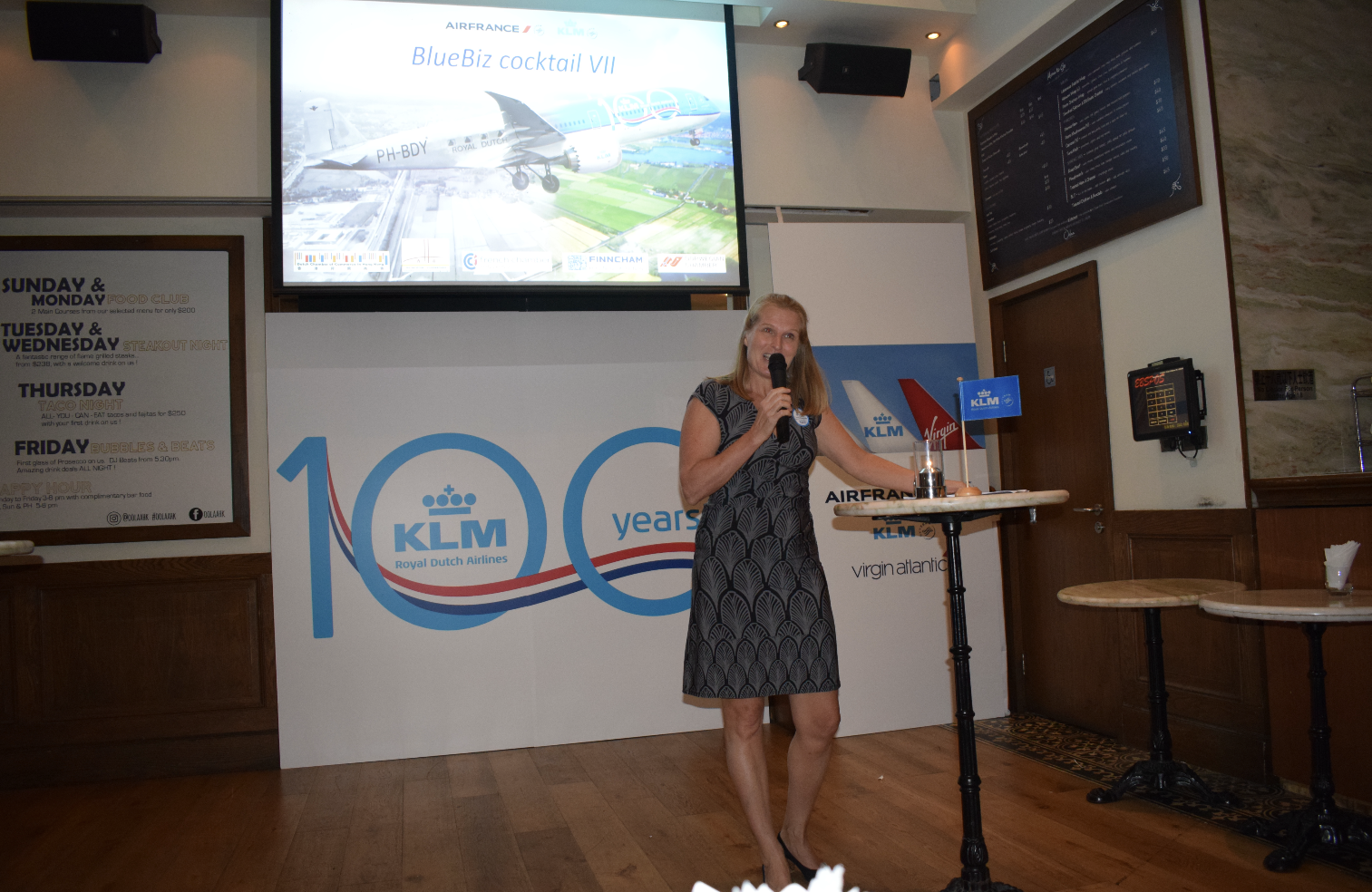
Maaike: The community was becoming much more diverse. It was no longer simply a matter of arriving in Hong Kong to work for a large Dutch company. There were more SMEs, more young professionals and more Dutch people working for international or Hong Kong-based businesses.
We had to cater to that broader audience. As a Board, we thought carefully about whom we could invite and how we could introduce the Dutch Chamber to people who might not previously have considered joining.
The landscape continues to change. Since returning to Hong Kong, I have seen a loyal core of familiar faces alongside a great group of new people. That combination is important. The Dutch Chamber needs to remain inclusive and continue adapting.
Muriel: We also wanted to understand members’ needs more closely to provide a more tailored service. One initiative I was particularly proud of was the mentorship programme. We were seeing growth among young professionals and SMEs, and conversations with members led us to connect experienced professionals with people who were starting out.
It was a very good way to bring together the knowledge already within the Dutch Chamber. Members could learn from one another, and it also helped attract new people. By the time I left, we had reached the fourth round of the programme.
Were there particular initiatives that helped you connect with prospective members?
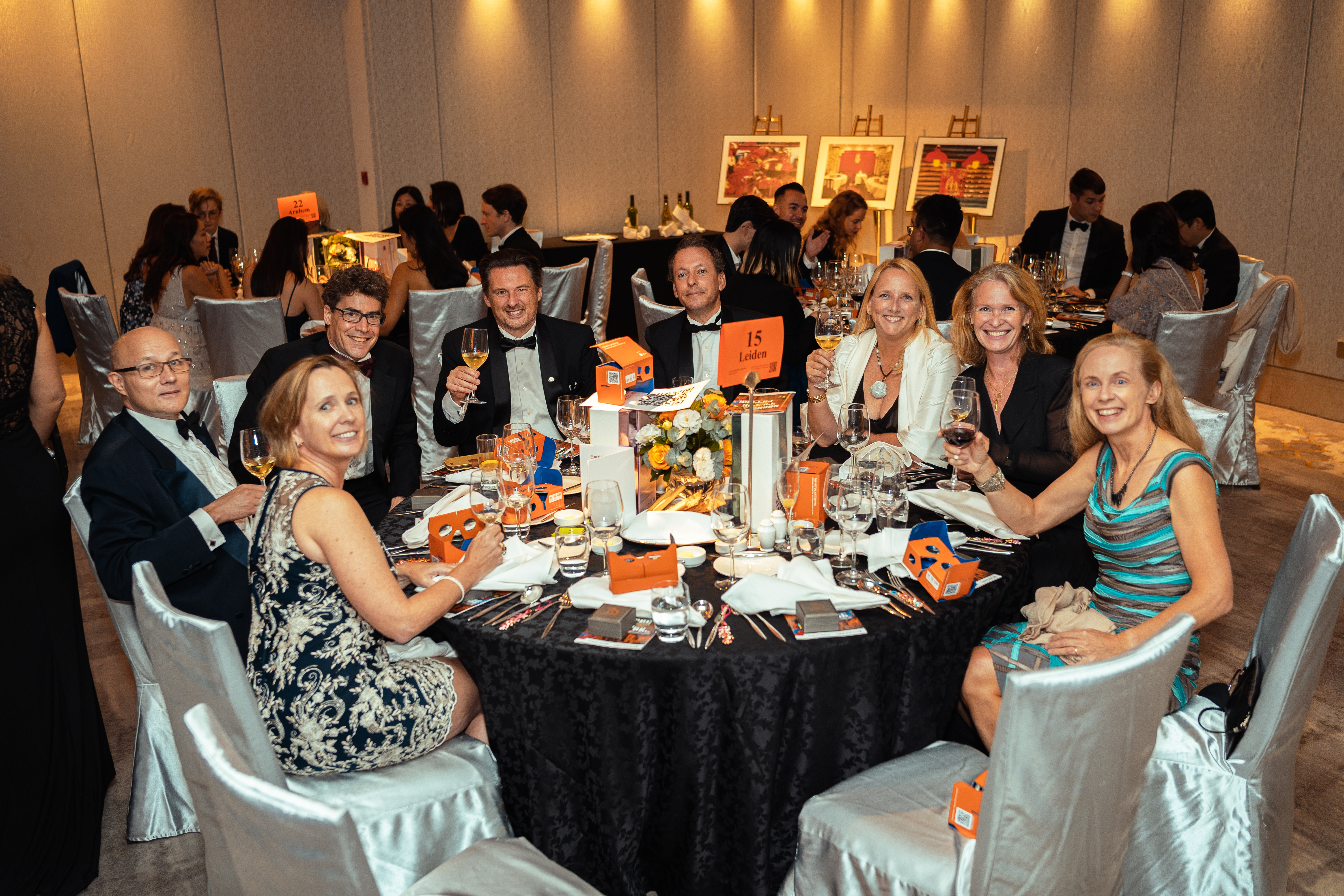
Maaike: The junk trips for prospective members were a particularly good example. I remember the discussions at Board level, and Board members always tried to attend.
They were a wonderful way to introduce people to the Dutch Chamber and let them experience its connections for themselves. They took place on Monday evenings, so there was always the challenge of getting away from the office in time! But they worked very well.
Muriel: The small format made a real difference. We could invite up to eight prospective members, together with Board representatives and members of the Dutch Chamber team.
That gave us time to explain what the Dutch Chamber offered, but just as importantly, to listen. What did these people (and their companies) need? What were they looking for? How could we help?
It was a more focused approach to networking, and it helped us understand new needs as the community changed.
The Dutch Chamber also became more outward-looking. How important was cooperation with other organisations?
Muriel and Maaike: It was very important. Hong Kong remained central to our work, but we increasingly looked at how cooperation could expand our members’ connections and opportunities.
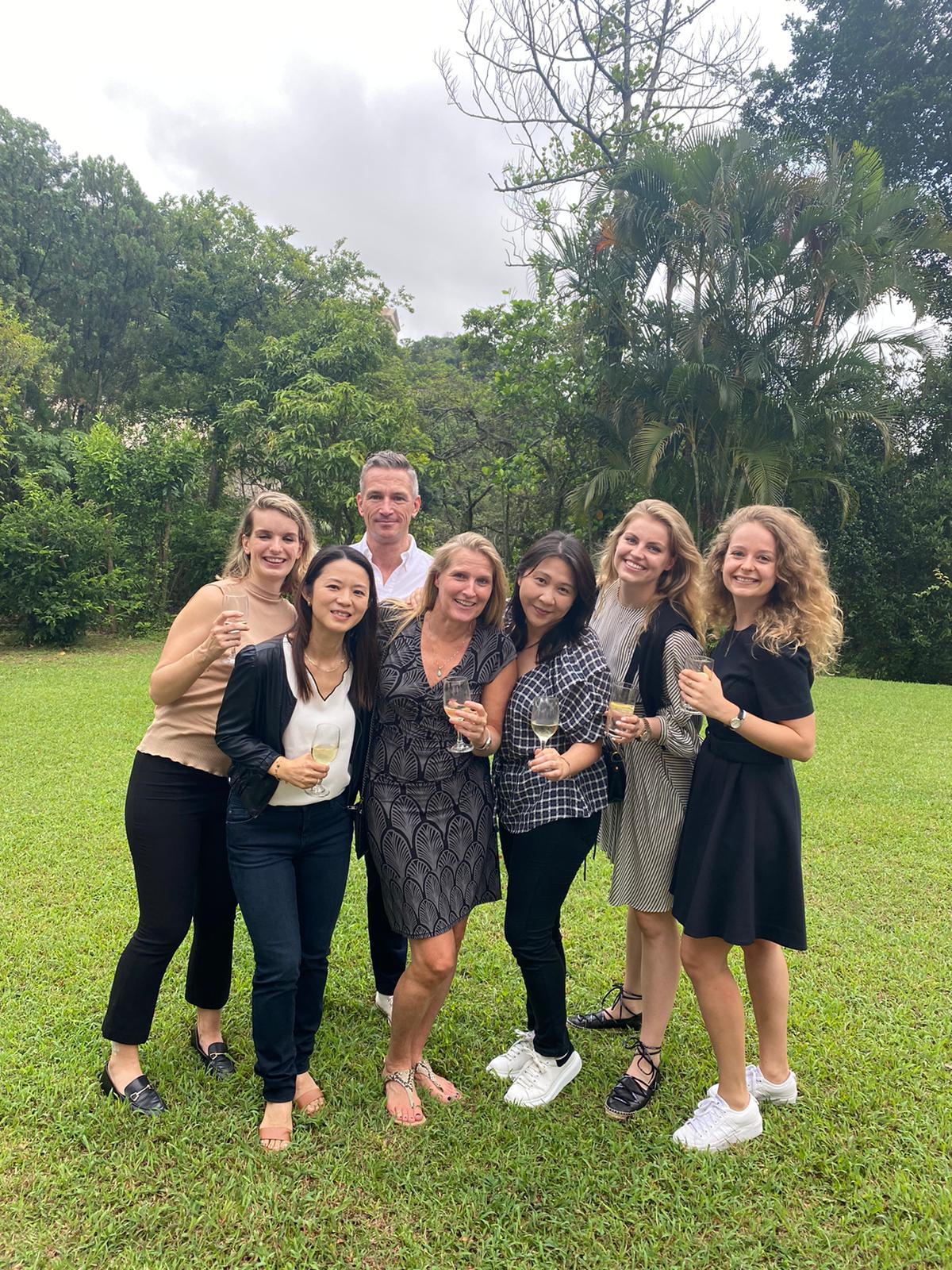
We worked more closely with other international chambers and associations on shared topics, including sustainability, diversity and inclusion. By organising events together, we could bring wider networks into the conversation. Many chambers face similar needs and challenges, so it makes sense to draw on one another’s strengths.
Our relationship with the Consulate was important as well. Moving into the new offices together gave us an opportunity to consider why being under the same roof mattered, while remaining independent organisations. It strengthened the relationship and gave us a much better space for events and other activities.
Sustainability, diversity and inclusion were also gaining prominence. How did those themes become part of the Dutch Chamber’s programme?
Muriel: These were important topics for many of our members. Several Dutch companies already had them high on their agendas, partly driven by their European headquarters.
We looked at both the environmental and social aspects of sustainability, including diversity and inclusion. Working with other chambers helped us bring these subjects to a wider audience.
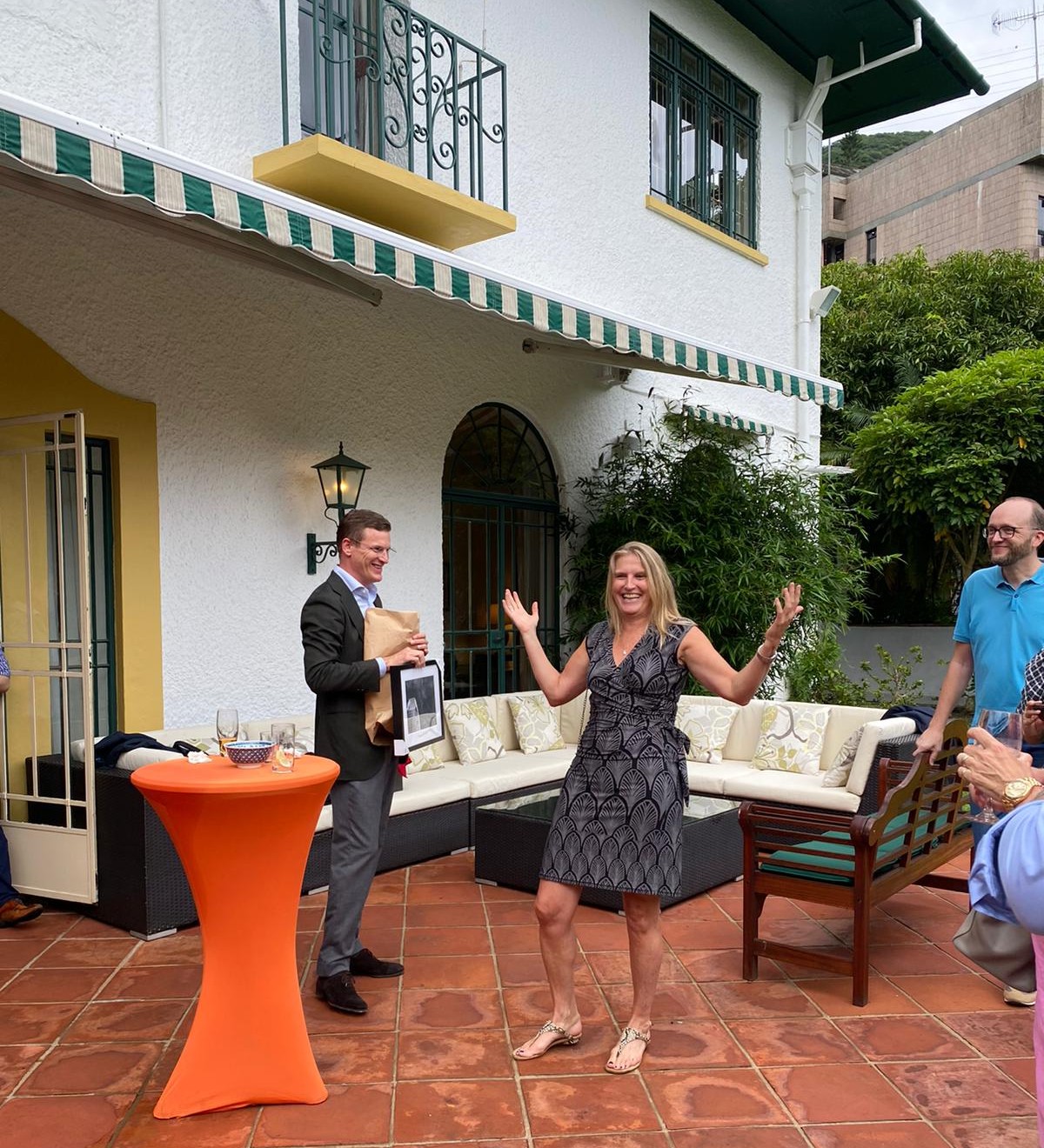
One highlight was the Game Changers Award Gala. We built the programme around sustainability and put considerable effort into giving the nominees visibility and explaining the ideas behind their work.
For me, it was a particularly successful Gala because there was so much substance behind the celebration.
Maaike: Women in Business was an initiative I had really enjoyed being part of, and cooperation between chambers around women’s professional networks and diversity continued to grow.
There were shared interests across the business community. Bringing people together around those interests allowed us to make better use of the knowledge and networks available to us.
Then came the pandemic. How did you keep the Dutch Chamber active and relevant during such an uncertain period?
Muriel: Nobody expected a pandemic, and we had to adapt quickly. Our first priority was keeping members informed about government measures and regulations. There was so much uncertainty around working, travelling and quarantine. We wanted to share relevant information as quickly as possible and help reduce some of that uncertainty.
Then we had to learn how to organise interactive online events and webinars. It was not simply about putting a presentation online. We wanted to maintain knowledge-sharing and help people stay connected, so we worked with the committees to develop those formats.
At the same time, we kept looking for opportunities to meet in person whenever the regulations allowed. We would have a venue and arrangements ready so that, when a window opened, we could move quickly.
Maaike: Those opportunities to meet were very important. In-person events are a significant part of the Dutch Chamber’s role in Hong Kong.
People look forward to occasions such as the Herring Party and the Mussel Party because they have become traditions. Keeping those connections going mattered a great deal.
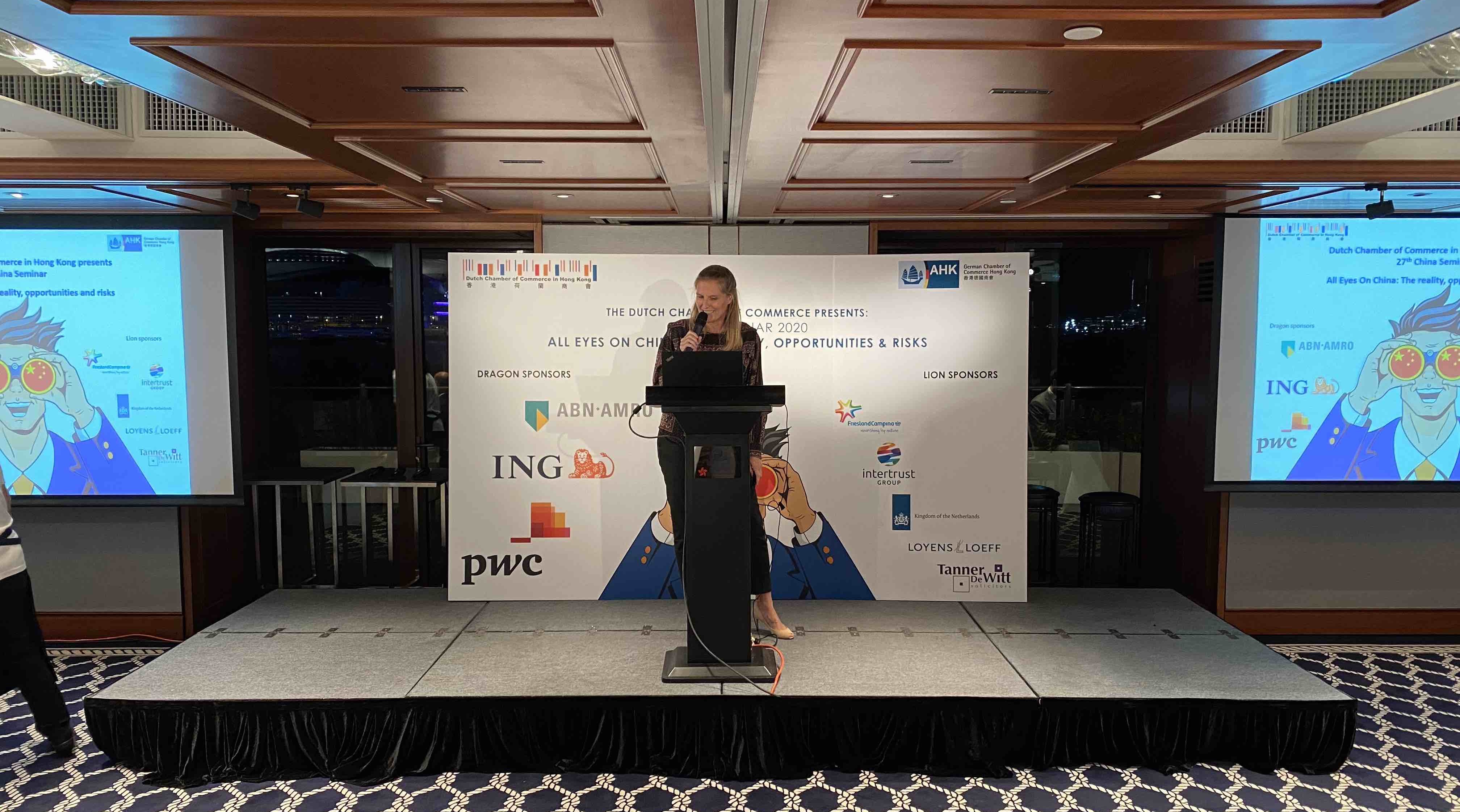
Muriel: I have particularly fond memories of the China Seminar. We arranged transparent table dividers so that people could have dinner together while following the regulations. You could feel how ready everyone was to reconnect.
The new office facilities were also a great help. We could have a panel in the event room while the audience joined online, which allowed us to preserve some interaction. The pandemic also encouraged us to develop alternative services and sources of income. We introduced paid business support, including a soft-landing kit connecting businesses interested in Hong Kong with relevant service providers.
We also started an academy offering online courses in areas such as digital marketing, Mandarin and Cantonese. Wherever possible, we worked with our members to deliver these initiatives. These were new ways to support businesses while also contributing to the Dutch Chamber’s financial sustainability.
Looking back at that period, what are you most proud of?
Muriel: I am proud that we managed to grow the membership despite the challenges. Even before the pandemic, we had experienced the protests and the uncertainty this created for businesses.
We professionalised our operations and communications, but the purpose was always to serve members better. The Dutch Chamber is a membership-driven organisation, so everything you do should be relevant to the people and organisations you serve. Seeing the membership grow felt like recognition that the changes we were making were really adding value.
Maaike: I fully agree. Our years were only a small part of the Dutch Chamber’s thirty-five-year history, but it is lovely to have contributed to that journey.
Personally, it has been a way to give something back to Hong Kong. It is a wonderful city in which to work, live and see your children grow up. I have made so many friendships and professional connections here.
I am very pleased to have been part of the Dutch Chamber’s journey. Hopefully, we will have another conversation for its seventieth anniversary!
After all those changes, what do you see as the Chamber’s most important contribution to the Dutch business community?
Muriel: Bringing like-minded professionals together. That happens through business opportunities, events, knowledge-sharing and connections with government.
But it also goes beyond the Dutch community. The Dutch Chamber helps its members to connect with Hong Kong’s wider, multicultural business environment and find their way in work, business and life here.
Maaike: When I first came to Hong Kong with ING, it was easy to become absorbed in the company’s own network. The first people I met were colleagues, and naturally they were the people I asked for advice.
The Dutch Chamber introduced me to people with very different experiences. I enjoyed that because I wanted to broaden my view.
That is also why I reached out to the Netherlands Chamber of Commerce Australia (NCCA) when I arrived in Melbourne. It is a way of becoming engaged in a new place. Particularly if it is your first time living in Asia, having people to connect with can make a real difference. You can find a shared cultural understanding while also becoming part of a much wider community.
Finally, what would you like future Dutch Chamber leaders and members to remember?
Muriel: The Dutch Chamber’s purpose is to facilitate cross-border trade and build trusted networks.
How you fulfil that purpose will change. Sometimes advocacy and representation need more attention; at other times, networking, events and member services become the priority.
But the underlying role remains the same. The Dutch Chamber is a bridge, helping Dutch companies and individuals enter overseas markets while connecting local and regional businesses with Dutch partners. It works in both directions and reaches beyond the Dutch community.
Maaike: Remember that the Dutch Chamber is a member-driven organisation, so you need to be adaptable.
Our time was not simply about continuing to grow in the same way. It was about responding to changing circumstances, and I think that will remain important.
Embrace the opportunities, not only the challenges. And remember that giving something back brings something to you as well.
For me, it has been a wonderful journey. I feel proud of what we achieved and of the people we achieved it with.