Interview with Sachin Tipnis - Senior Executive Director at HKU
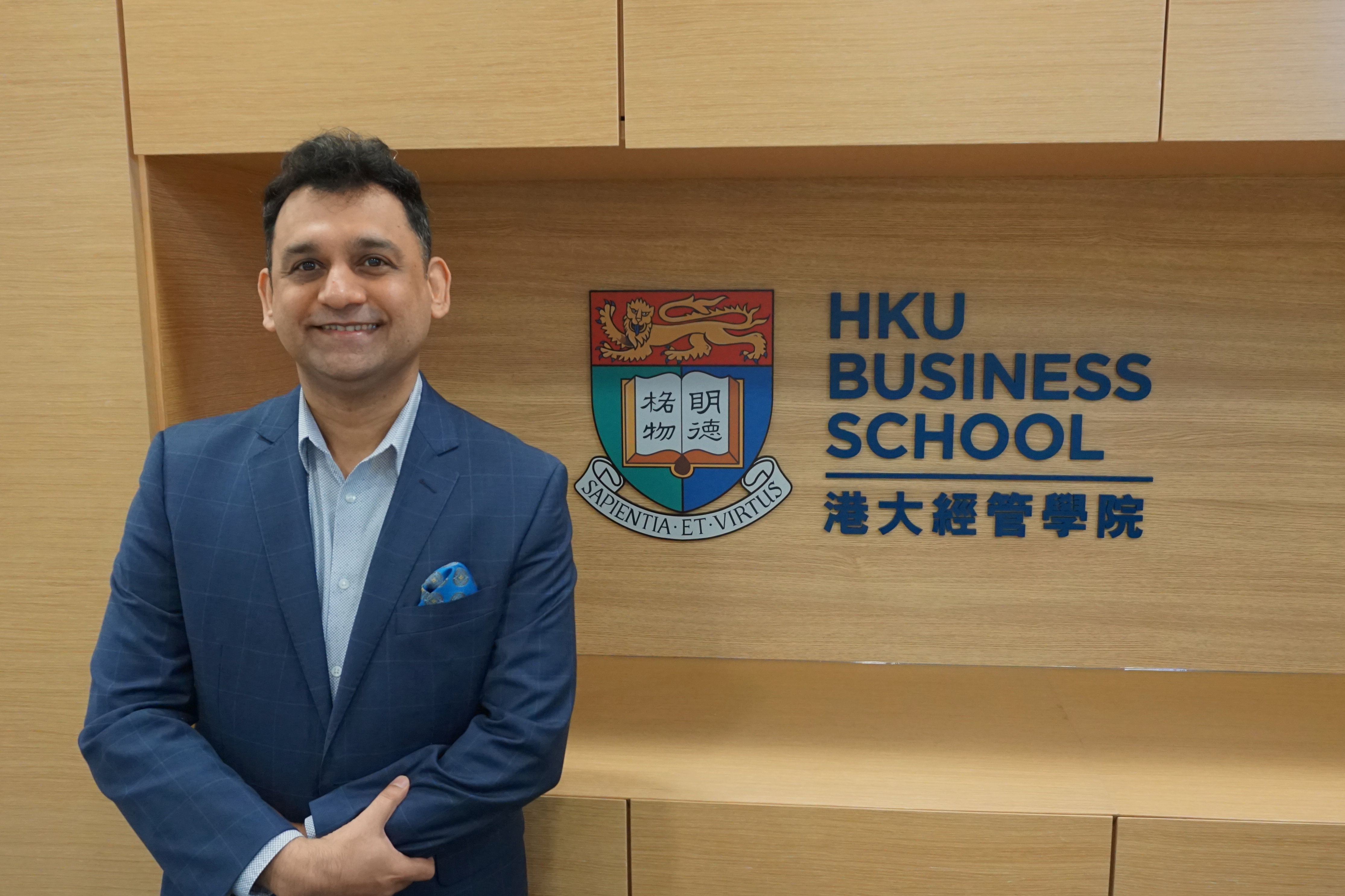
Could you introduce yourself and your role at HKU Business School?
Before I tell you my current role, let me share a bit of context, because I think that tells the story best. I came to HKU as an MBA student in 2004, fell in love with this brilliant city, and decided to stay. I started my career here with just the MBA programme and, over 20 years, built up my portfolio to include overseeing our MBA, EMBA Global Asia, and specialised master’s programmes—managing everything from admissions to career services. I handled the entire eco-system for these set of programmes.
Last year, I moved into a broader role at the Business School level. My focus now is on strategic direction and growth for various key areas, for example a key project is integrating all career services accross programmes under one umbrella to support every student studying at our School. I’m also working on our expansion into new markets and having stronger ties with our corporate and instituanal partners. I still continue to be involved with our MBA programmes, working closely with the team, students and alumni community.
HKU is a top-ranked university. Beyond rankings, what is the core mission of HKU?
Rankings are important, but they can be fleeting. For me, HKU stands on three enduring pillars. First, reputation. Next year, we celebrate 115 years of academic excellence. To sustain a top-tier reputation for that long means we are doing something fundamentally right. The key is to sustain it. Second, recognition. We want our graduates to say “I am from HKU” anywhere in the world and be met with immediate respect, without a second question. This recognition is built on academic rigor and the impact our students can create. Third, network. It’s never about quantity, but quality. At HKU, you are surrounded by the best talent, creating a powerful, lifelong network. This combination truly defines our community.
Your programs use the term "Global Asia." What does this idea mean for what students actually learn and experience?
We see that companies which simply copy-paste strategies from San Francisco or Frankfurt to Asia often struggle. Asia is not single dimensional; Japan is different from India, which is different from Indonesia. “Global Asia” is our answer. We ensure our students understand that while businesses are globally interconnected, success requires deep local insight. As the number one university in Asia, located in its premier business hub, we provide that crucial context. Through case studies, faculty expertise, and immersion, we prepare students for global careers where Asia is a critical market, equipping them to make informed, localised decisions.
You were an HKU MBA student yourself and now lead these programs. How does that shape the experience you want to create today?
Having been through the programme is invaluable. It allows me to understand the student mindset—what they seek from their MBA journey. While student perspectives evolve (my generation thought differently!), the core principle remains: we must deeply understand our students. Furthermore, my long involvement has cemented that our ultimate role is to train top talent for the business world. This means constantly aligning student aspirations with corporate needs. My dual perspective helps ensure our programme bridges that gap effectively, creating relevant, transformative experiences.
For a young Dutch professional considering an international MBA, what's the advantage of choosing HKU in Asia?
You must think about the future, not just the past or present. Asia is the future—it’s home to half the world’s population, a young demographic, and a colossal market vital for every multinational. Simultaneously, Asian companies like Alibaba, Bytdance, Uniqlo or Muji have become global giants. Understanding Asian business is no longer niche; it’s critical. By immersing themselves in Hong Kong, Dutch professionals gain firsthand exposure to these dynamic markets. Even if they return to Europe, this experience gives them a tremendous advantage, providing insights that peers without Asian exposure simply won’t have. We believe in learning business where business is, and this is where the business growth is.
For Dutch companies in Hong Kong, what is the best way to connect with HKU?
We would be honoured to collaborate. I see a powerful, three-way partnership. First, knowledge exchange: Dutch companies can provide insights that help us refine our curriculum to match real-world needs. Second, talent access: our students are top-tier global talent, ideal for internships and full-time roles, especially for companies managing regional operations from Hong Kong. Third, leadership sharing: we would welcome senior executives to join our mentorship programmes, panels, and fireside chats, sharing invaluable experience with the next generation.
Looking ahead 5 years, what is one big change you hope to lead at HKU Business School?
Beyond the obvious impact of AI on curriculum, I want to focus on a specific shift. AI will handle basic research and framework creation. So, the key question is: what skills do our students need to build on top of that AI-generated foundation? We must train them to be more innovative, strategic, and analytical in new ways. My goal is to pioneer this skill-set development so that AI becomes a powerful tool for our graduates, not competition. A second, related focus is leveraging Hong Kong itself as our second campus. Beyond our university walls, this vibrant, multi-layered city offers immense learning through its energy, people, and business pulse. We will help students harness this unique urban landscape as an integral part of their education.
What would an ideal partnership with the Dutch Chamber look like for HKU?
We are eager to connect. A partnership with the Dutch Chamber is based on mutual respect, knowledge exchange, and community. We want the valuable perspectives the Dutch community brings to enrich our programmes. Conversely, we can be a platform for Dutch professionals to deepen their understanding of Asian business practices and networks. It’s a pure collaboration aimed at mutual professional and personal growth. We look forward to building this friendship and exploring all avenues of working together for shared success.