From Finance to Frontline Leadership: Guru Balasubramaniam on Leading Securitas Hong Kong
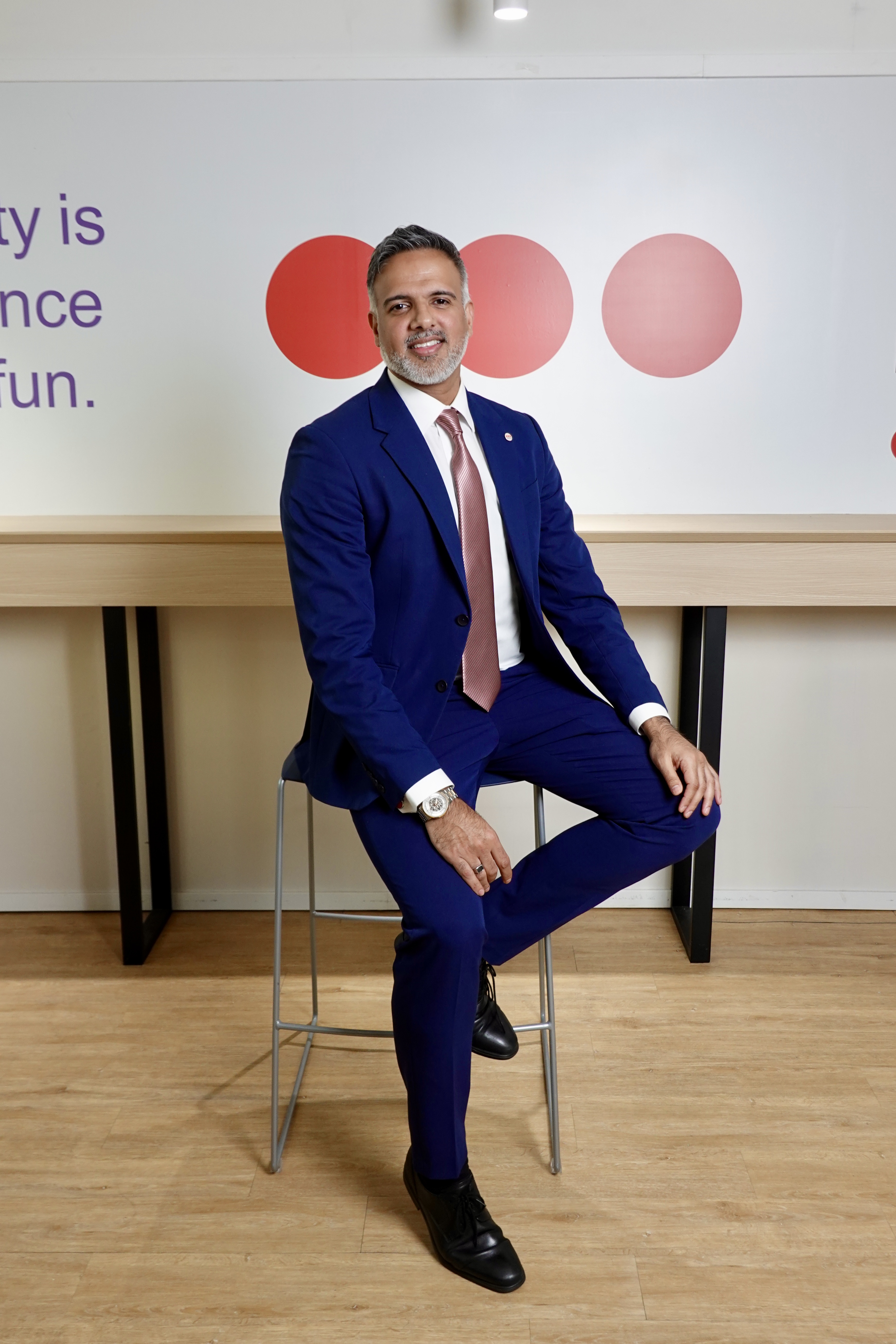
Could you tell us a bit about your current role at Securitas Hong Kong and your professional background?
I am currently the Country President of Securitas Hong Kong and Macau. Our role is to help clients protect their people, assets and operations. While many people still associate security primarily with manned guarding, today's security solutions increasingly combine on-site personnel with technologies such as surveillance systems, access control and remote monitoring. It is this integrated approach that creates the greatest value for our clients.
Securitas is a Swedish company with a strong presence in Europe and the United States, and in Asia we operate in 13 other countries. Most of our clients are multinationals, so where they also have operations elsewhere in the region, such as Taiwan or Japan, we try to support them wherever we can. Much of our work is with data centres, corporate offices, technology companies and financial institutions, all of which have high security standards.
As for my own background, I am Dutch, grew up in the Netherlands, and studied in Rotterdam and Delft before joining Rentokil Initial as a finance trainee. In the final year of my trainee programme, I asked for a challenging assignment and came to Hong Kong for one year. That was 12 years ago, and I am still here today.
I joined Securitas four years ago as Country President, after holding several commercial and operational roles in the region. While my foundation is in finance, I have always been more interested in how finance can help drive business performance. For me, numbers are most valuable when they help organisations make better decisions and achieve better outcomes.
You started your career in finance and business control roles in Europe before moving into operations and country leadership. What made you decide to make that shift?
In many ways, the transition felt quite natural. I spent ten years at my previous company and held several roles there, so I was able to expand my responsibilities year on year. Finance remained my core, but I gradually focused more on sales and then on operations. I learnt the business step by step before making the full move into general management.
Being in finance also gives you a good reason to ask questions of every other department, and that is exactly what I did. Along the way, I realised that I genuinely enjoyed that side of the business. When the opportunity came to take on broader leadership and managerial roles, I took it, and I was able to use my finance background to grow the business from a management perspective.
More fundamentally, I have always been interested in what motivates people. Beyond money and other extrinsic rewards, what makes people tick? How do you encourage people to deliver more than what is asked of them? Putting processes and structure in place in finance is rewarding, but I felt I could add more value on the people side. In my operational and commercial roles, I was leading teams of 300 to 400 people, and motivating them to give their best is something I really enjoy. You meet many interesting people, learn about different cultures and discover different ways of working. You learn something new about someone every day, and that is what gets me up every morning.
That said, I do believe that once you are in finance, you are always in finance. I still look at the numbers first. They rarely tell the entire story, but they are often the best place to start.
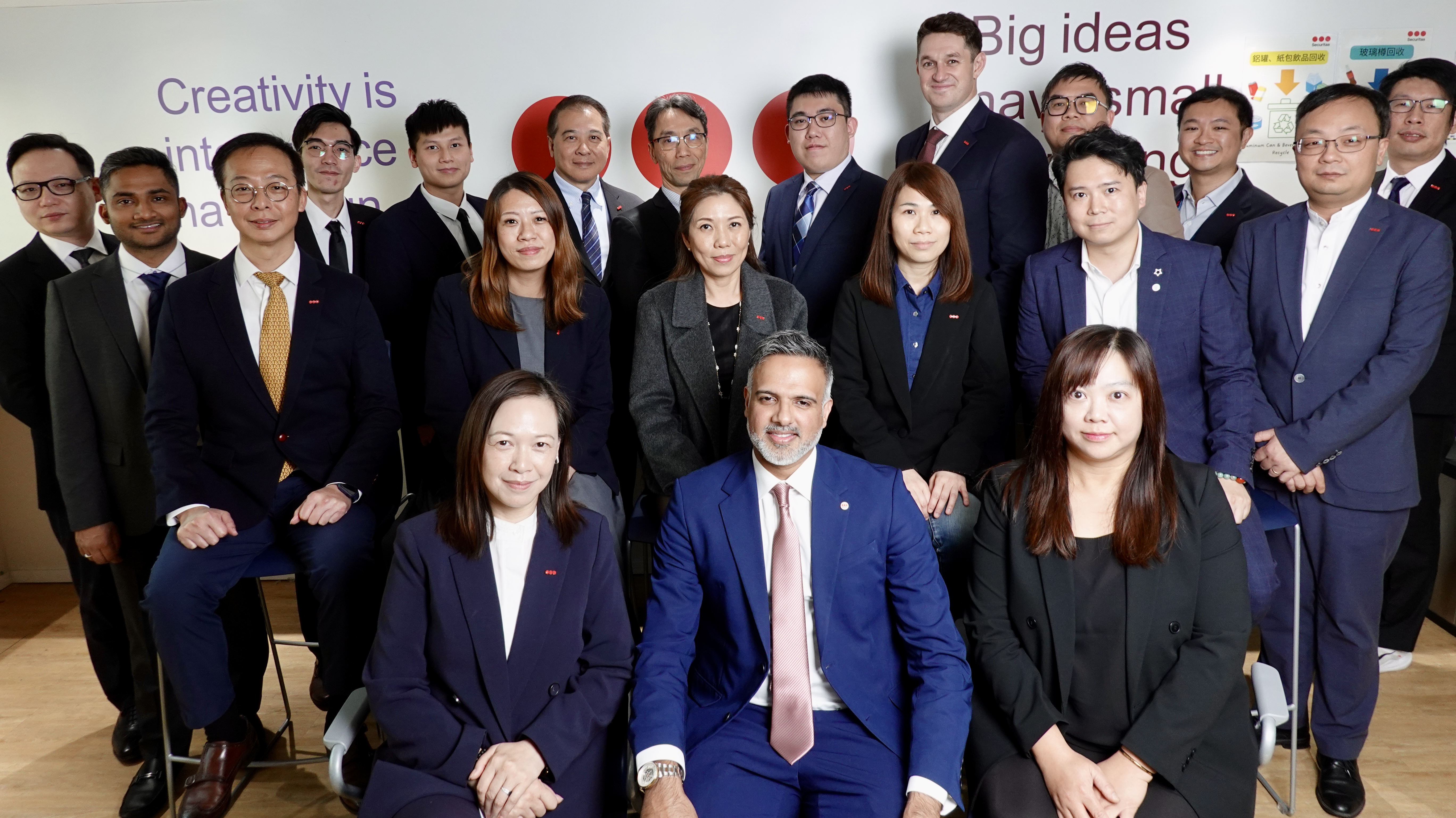
You mentioned working across different cultures. Does the approach to security differ from one country to another? Yes, it does. The security industry was relatively stagnant for a long time and depended heavily on manned guarding. With advances in technology, however, different countries are taking different approaches to how quickly they bring technology into their security workforce.
Hong Kong has made considerable progress on the technology side, with far more advanced cameras and systems. I believe there is still much more we can do with our workforce, particularly in training our people to make sure they are future-ready and able to manage the technology of tomorrow.
That requires a cultural shift as much as a technological one. Organisations need to embrace change and innovation, and to think about doing things differently, rather than saying, “This is how we have always done it for the last 20 years. We need to ask, "How can we do this better?". Building that culture of change and creativity with our teams has been very rewarding.
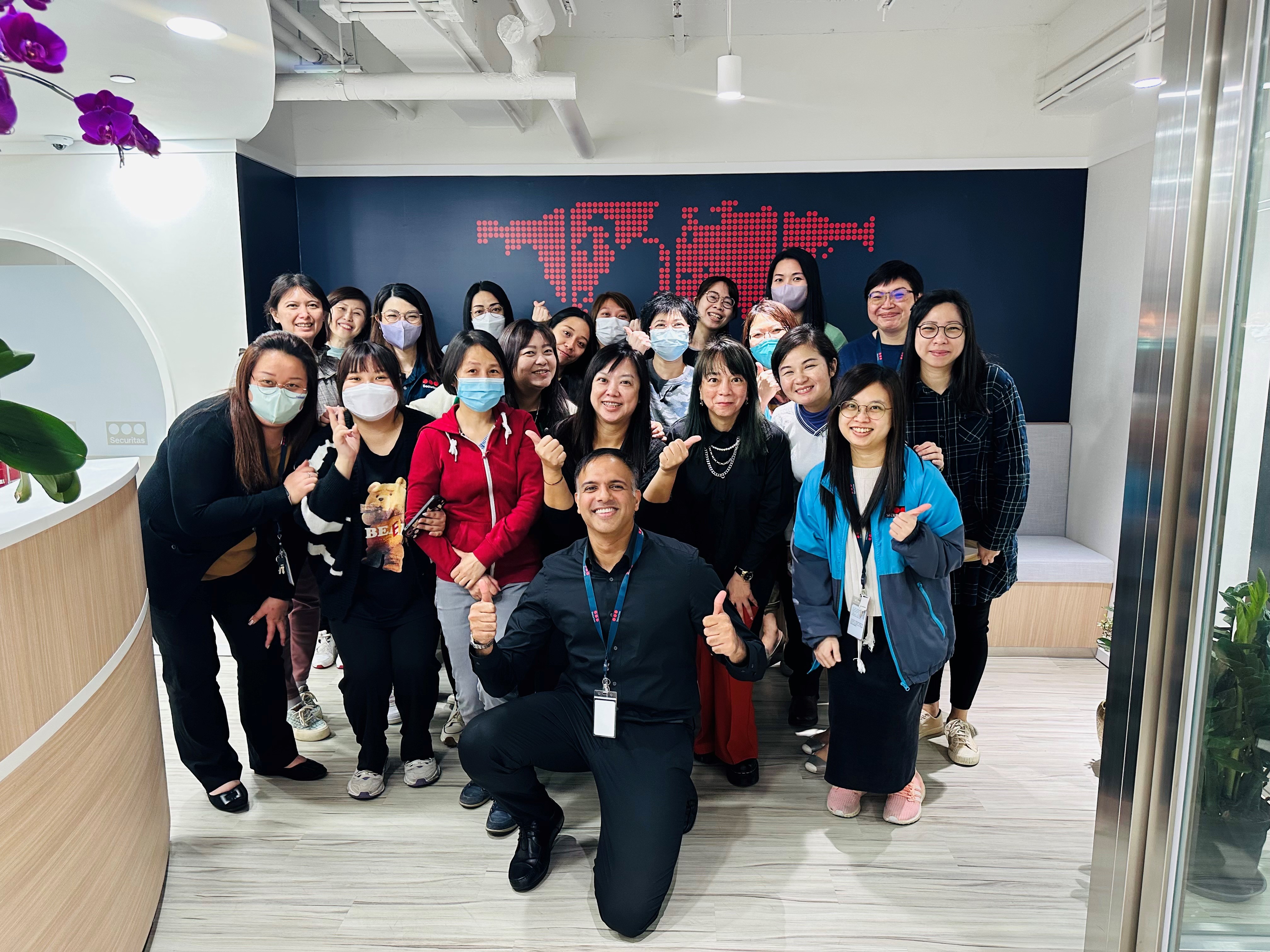
Is it challenging to implement security technology in Europe or the United States, where data protection laws are stricter?
In some respects, yes. Some regions have stricter data protection laws, and there are many difficult questions to consider. Who can access the footage? Who can view it? What do you do with the data, and where do you store it? These questions are particularly important in Europe and the United States, but the laws are also becoming stricter in this region.
We have also seen more cyber-attacks here, so this is always at the forefront of our minds. Technology is valuable, but it must be used ethically and safely. We protect not only physical assets; we also have a duty to look after digital assets.
In the end, the human factor is always the weakest link. It only takes one person to click on the wrong thing or open something they should not. We therefore run penetration tests on our own employees, purely for educational purposes, to show people how easy it is to fall for a suspicious email or link. We live in a world where people feel they must respond to everything, every minute of the day, and that can be very dangerous, particularly in critical infrastructure. My advice is simple: take a step back, look and think before you click.
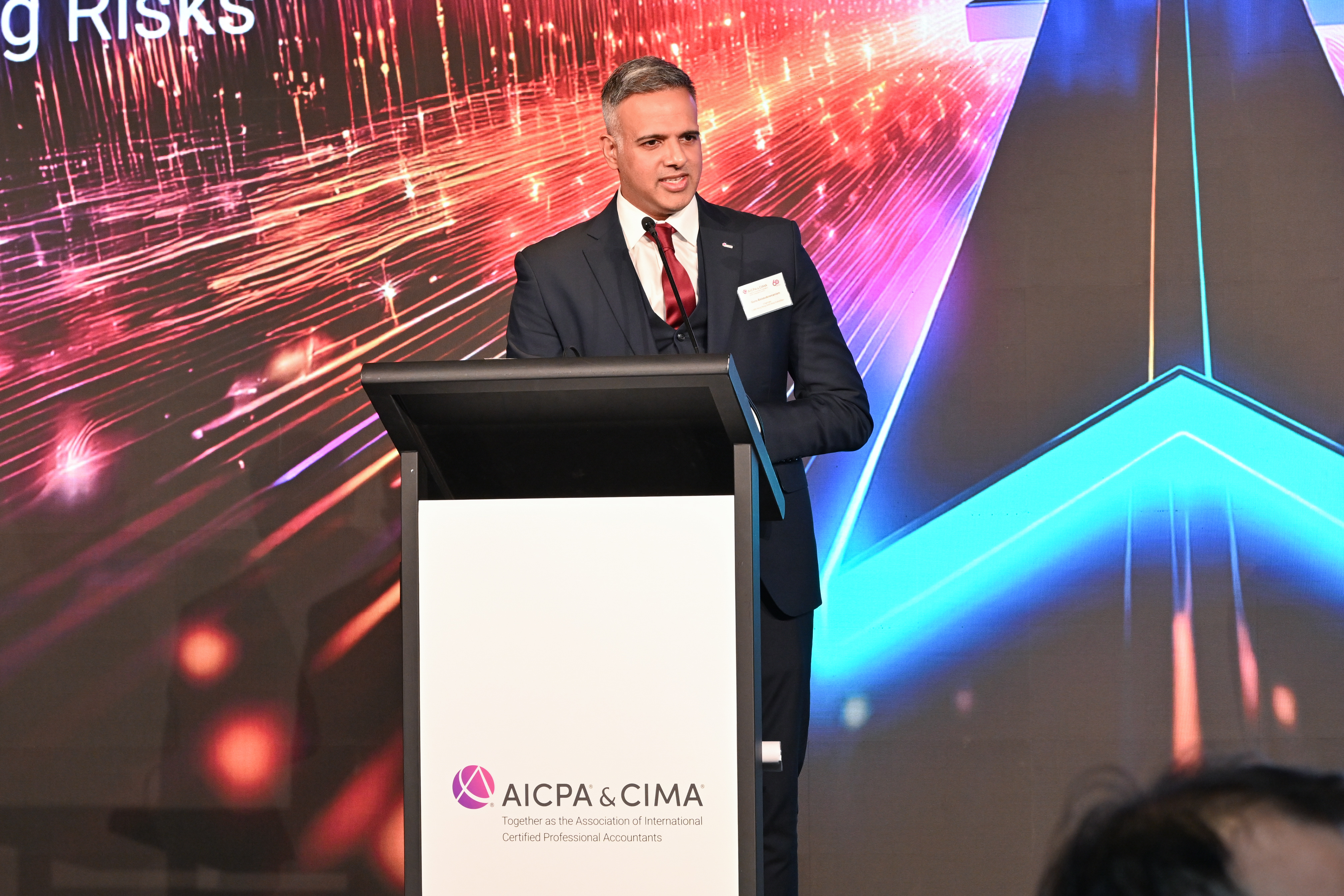
You have been very active with CIMA Hong Kong and served as its Chair until June this year. What do you enjoy most about your work with CIMA, and how has it changed over the years?
My finance journey began with CIMA, as I was working to complete the qualification when I first came to Hong Kong. I became close to the organisation here, first as an MC and helping with its annual dinner, and that gradually led to joining the committee and later becoming Chair. My term finished in June, so I am now Past Chair, but I remain on the committee, and I expect that to continue.
What I enjoy most is being close to the finance community. Hong Kong is a finance hub, and through CIMA you get close to government policy and meet many Legislative Council members. You feel connected. It is a very good way of feeling the heartbeat of Hong Kong’s finance world.
Over the years, member engagement has increased significantly. We organise many events and outreach activities that bring students and members together, and we now put much more effort into involving members in policy work, such as the Budget consultation and other initiatives that benefit the people of Hong Kong. We are also working with multinationals to open their doors to our members and students so they can learn more about these companies.
CIMA is also highly recognised in mainland China, and its growing popularity there has led to more collaboration with teams across the Greater Bay Area. This year, we gathered input from members globally on the future of finance, and there are several large events taking place in both mainland China and Hong Kong to share what the community believes lies ahead.
Finance is changing too. It is not only the security industry. The use of AI brings new risks, but the opportunities are immense. As a profession, we need to develop our skill sets now, not ten years from now, and make sure they keep pace with current developments.
Being Chair is a significant time commitment. There can be two or three events a week, particularly in the fourth and first quarters, from company anniversaries to market openings and meetings with Legislative Council members. We have a great committee team supporting this work, and our new Chair, Louis Lin, has taken over and is doing an excellent job.
You studied and worked in the Netherlands earlier in your career. What made you want to get involved with the Dutch Chamber now?
When I first arrived in Hong Kong, I focused primarily on integrating into the local community. I became deeply involved in the finance profession and spent much of my free time playing badminton, so my network naturally developed around those interests rather than around nationality.
I always felt that you should first understand and immerse yourself in the local culture before creating a little bubble for yourself. Having done that, I now feel it is the right time to reconnect with my Dutch roots. Who are the Dutch people in Hong Kong? What can we do as a community to integrate and show that the Dutch community is here? There are many Dutch professionals working in Hong Kong, in both Dutch and non-Dutch companies, so I think it is important for us to be visible and to be part of that.
I also see considerable potential in working with other chambers. I know the Dutch Chamber is already doing a great deal with the Belgian and inter-chamber communities, and I believe we can bring even more people together. When you combine efforts, you can hold joint events, and much of the information we gather is relevant to everyone.
You are also Chair of the Finance Committee at the Swedish Chamber of Commerce. How did that involvement begin?
My involvement began with Securitas. As a Swedish company, and one of the largest Swedish companies in Hong Kong, I felt it was important for us to understand Swedish values and culture, become more integrated and show our support for the Swedish Chamber.
Surprisingly, many Swedish values are closely aligned with Dutch values, particularly when it comes to innovation, technology, transparency and honesty. The Swedes like to be on time, which is very similar to the Dutch, and they value creativity. The Swedish Chamber has many creative members, including designers and architects. Both communities are also innovators in technology; if you think of ASML, the Netherlands is right at the forefront.
There are also clear overlaps in areas such as sustainability and ESG, healthcare and life sciences, and innovation, where technology and AI have lately been the main drivers. I see two very smart chambers, so my view is that we should collaborate more and do more together.
Looking ahead, what are one or two things you would really like to see the Dutch Chamber do more of or improve for its members?
The first would be to increase its visibility further. Many people underestimate the size and influence of the Dutch community in Hong Kong. The Dutch Chamber already runs many events, so raising awareness through social media and events would help more people see what it offers.
The second would be to build on sport and other non-conference events. The Dutch are very active in sport, whether it is dragon boating, football or hockey, and I can see pickleball becoming popular too. The weather here is wonderful for it, and these events are a great way to keep people active and bring them together in a more relaxed setting.
I am also encouraged to see more Dutch people coming to Hong Kong again after many left during COVID, including young graduates. Although the Dutch community is relatively small, it is very united, and people are always willing to give a hand to one another. For young professionals looking for opportunities, that network is extremely valuable. I may no longer qualify as a young professional myself, but I am always happy to lend a hand and mentor the next generation.
Posted on 6 October, 2026.