Dutch-Chinese Perspective on Business, Community and the Future of DutchCham
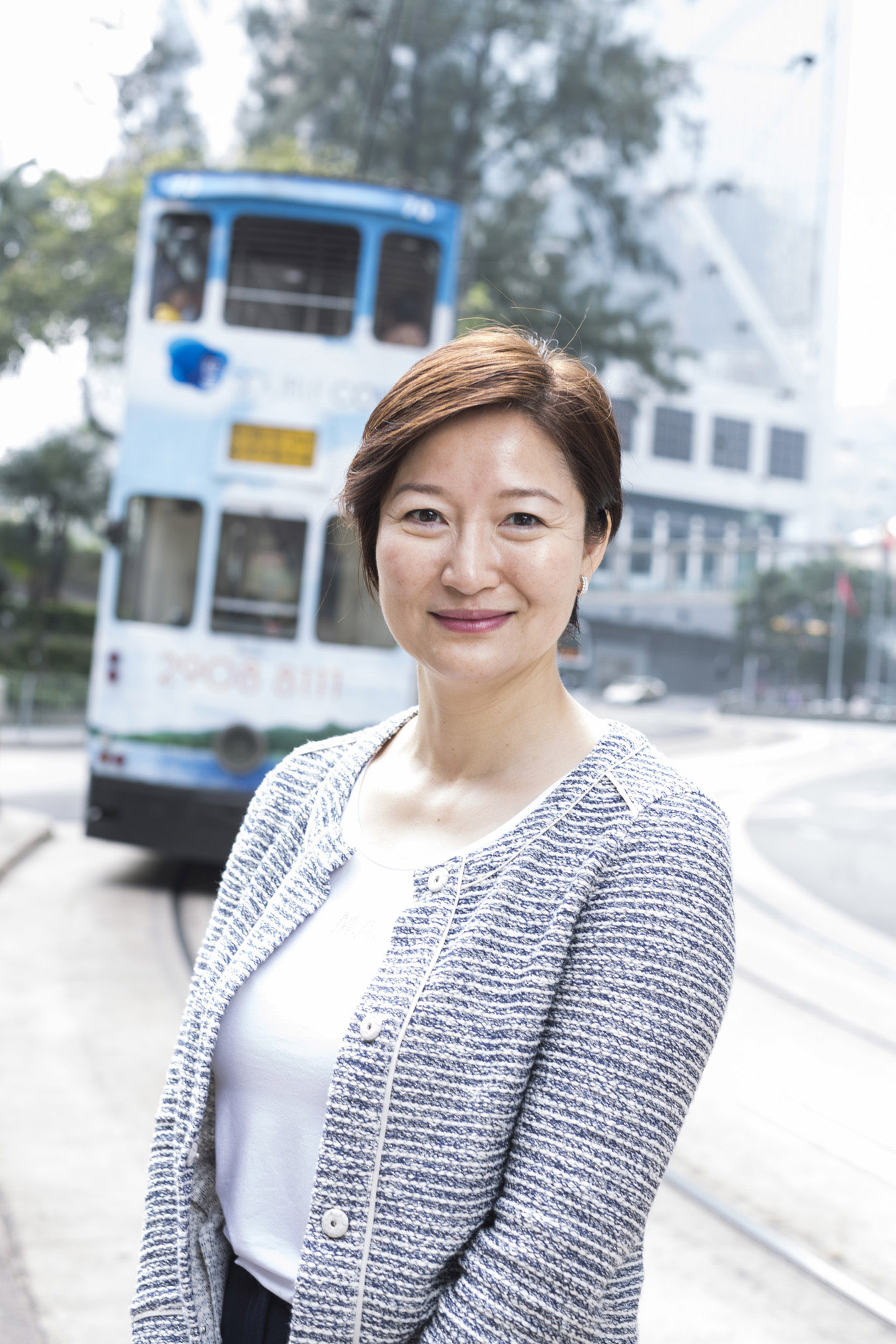
Could you tell us a bit about your background?
I was born in Hong Kong and moved to the Netherlands with my parents when I was nine years old. After completing school, I moved to Rotterdam to study economics.
At that time, Asian students were still relatively rare in Dutch universities. I believe I was one of the first Chinese women studying at Woudestein, the economics campus of Erasmus University Rotterdam. Today, a significant share of students there are Asian, which shows how much has changed.
What brought you back to Hong Kong after your studies?
Upon graduating, I was eager to return to Hong Kong. I started my career at Rabobank in Hong Kong, and later also worked for ABN AMRO and a Dutch-Belgian bank. Although I had lived and studied in the Netherlands, my professional career was built in Hong Kong.
Following my banking career, I became an entrepreneur and founded Sinova. Since then, I have also been actively involved in investments, particularly in technology companies. Over the past five to six years, I have supported Hong Kong family offices in investing in European tech firms. More recently, I have also assisted Hong Kong tech companies in entering and expanding into the European market.
When did you first get involved with the Dutch Chamber?
My involvement with the Dutch Chamber dates back to its early years. At that time, the Chamber was significantly smaller and more informal than it is today. The office was based at Rabobank, one of the founding members, which kindly provided a room for the Chamber manager.
There was only one manager then, and the Chamber had not yet established the committee structure that exists today. If something needed to be done, members simply contributed where they could, which was much more straightforward and informal.
The first committees were introduced later, after the Chamber moved into its own office and became more closely connected to the Dutch Consulate. In the mid-1990s, interest from the Netherlands in Hong Kong and China escalated, more people visited Hong Kong and China, more business delegations arrived, and business activity boomed.
A Chamber That Grew Through Highs and Lows
I would describe it as a story of resilience and growth. There were dynamic periods, quieter phases, and challenging moments, such as during SARS and later COVID. Nevertheless, the Chamber has continued to evolve and strengthen over time.
One of the most vivid moments I remember was the Hong Kong handover in 1997. The international business community organised a major celebration, and the Dutch Chamber played a highly visible role. At that time, the Netherlands held the chairmanship within the European business community in Hong Kong, which placed it in a unique, influential position.
I remember feeling very proud. Although the Netherlands is a relatively small country, the Dutch Chamber distinguished itself as one of the most active among the medium-sized chambers.
The Importance of Dutch Delegations
In the 1990s, delegations from the Netherlands visited frequently – sometimes every few weeks. These included mayors, business leaders and regional representatives from cities such as Eindhoven and Amsterdam who came to explore opportunities.
That constant flow created notable activity, visibility and momentum for both the Dutch Chamber and the Dutch Consulate. Hong Kong was regarded as an important gateway to China, and Dutch companies were eager to understand the region.
Today, the pace at which delegations come has become different. There was renewed energy from around 2015–2018, and while the world events slowed down this process, I’ve noticed activity has been gradually progressing in the past year. Even without reaching the level of the 1990s, it will be a solid foundation if we manage to achieve 60–70 percent of their level. It is crucial to understand that business can also be conducted differently—many things can be done online, which unlocks new possibilities.
Memorable Moments: Handover, Royal Visits and Dutch Projects
The handover period remains one of my favourite memories of the Dutch Chamber. The whole world was watching Hong Kong, and the Dutch Chamber’s role during that period created a sense that we were operating on a much larger scale than our size.
Another pivotal memory was the visit of Queen Beatrix and Prince Claus, not long after the new airport opened. Dutch companies had been so closely involved in the land reclamation for the airport, and Queen Beatrix remarked that arriving in Hong Kong felt almost like coming home.
Dutch expertise has contributed substantially to Hong Kong’s development. Major infrastructure and land reclamation projects, including Chek Lap Kok Airport and West Kowloon, have been closely linked to Dutch expertise. For a country of its size, the Netherlands has had a remarkably visible impact on Hong Kong’s development.
What do you see as the Chamber’s future role?
I believe the Chamber should be bold and forward-looking. In a rapidly changing world, organisations cannot afford to wait ten years to reinvest themselves. We need to reassess our role every five years, perhaps even more often.
One key area is the Greater Bay Area. For Dutch companies – especially SMEs - Hong Kong alone may not be enough, as business opportunities often lie beyond Hong Kong. While large multinationals such as Shell or Unilever have their own resources to navigate, smaller companies need guidance and networks. In this regard, Hong Kong can serve as a practical and accessible starting point for exploring the GBA.
At the same time, there is also a flourishing opportunity in the opposite direction. With Hong Kong and Mainland Chinese companies increasingly encouraged to go international, the Chamber can play a valuable role in connecting them with Dutch companies for their expansion in the Dutch and wider European markets.
What message would you give to Dutch companies today?
In recent years, I have spent more time in the Netherlands again, and have noticed that many Dutch companies have become more inward-looking. Compared with 15 years ago, the adventurous international spirit appears less pronounced. That is a pity, because the Dutch are at their best when they are international.
As a small country, the Netherlands' success has always depended on openness, trade and entrepreneurship. These strengths are still there - we just need to reignite the spirit. I hope the Chamber can help inspire Dutch companies to become more adventurous and more globally minded again.