Case Everaert on the Dutch Chamber's Community and Evolution
A Career Shaped by Change
Could you start by introducing yourself and sharing a little about your professional background and involvement with the Dutch Chamber community?
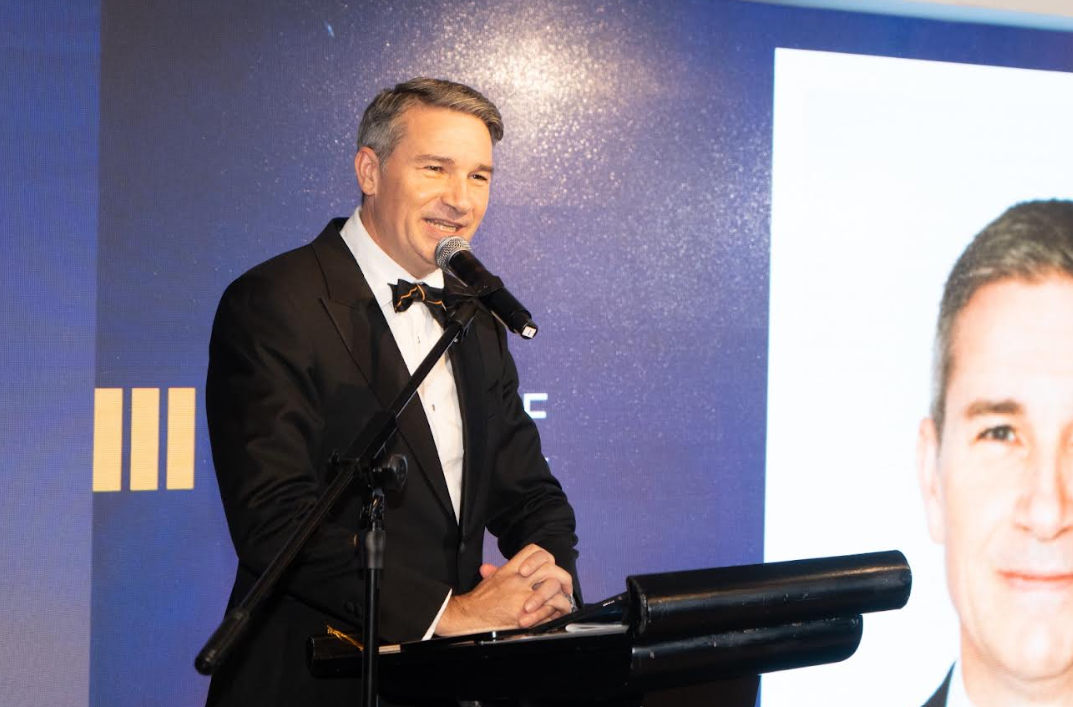
My name is Case Everaert, and I have lived in Hong Kong since early 1994. I began my career here with the Japanese bank Dai-Ichi Kangyo Bank (DKB), where I worked as an interest rate derivatives trader specialising in yen products. At the time, Japanese banks conducted a significant portion of their off-balance-sheet trading activities outside Japan, and Hong Kong was a natural hub due to its proximity to Tokyo.
I remained in the industry until 2007 and witnessed several major developments in the financial markets, including the Asian Financial Crisis of 1997. The crisis had a profound impact on the Japanese banking sector. Many institutions withdrew credit lines, leading DKB to merge with Fuji Bank and the Industrial Bank of Japan. The combined organisation later became Mizuho.
I subsequently managed Mizuho Bank's yen interest rate derivatives book. In the summer of 2007, we withdrew our credit line from Bear Stearns. Having experienced similar market turmoil during the Asian Financial Crisis, I began to question whether I wanted to go through another financial crisis. After spending around three months closing my positions, I left banking in November 2007.
I wanted to pursue a different path and joined Black Isle Global, a consultancy specialising in people development, organisational strategy and leadership communication. The firm provided an opportunity to develop expertise in public speaking, presentation skills and media training, and I have been working in this field ever since.
My involvement with the Dutch Chamber began shortly after I left banking. I became a member because I wanted my company to appear in the Dutch Chamber's membership directory and to build stronger connections within the Dutch business community.
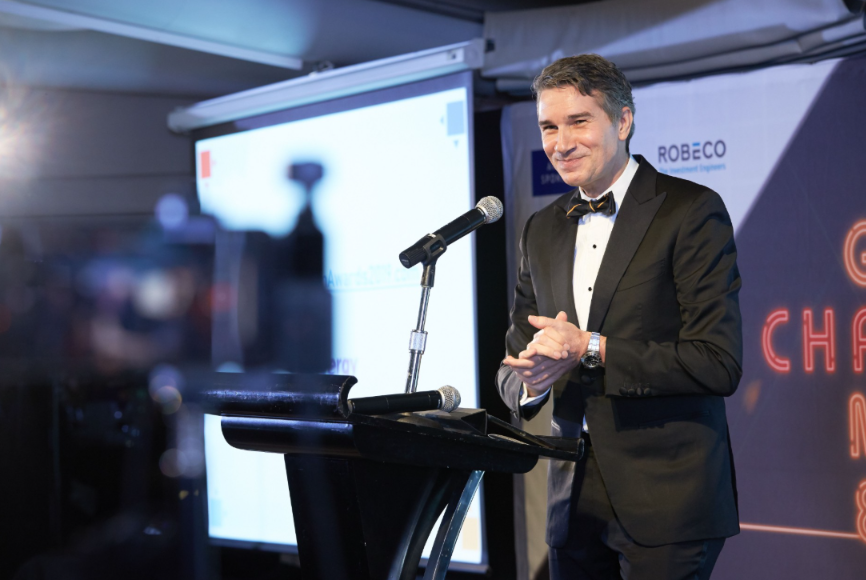
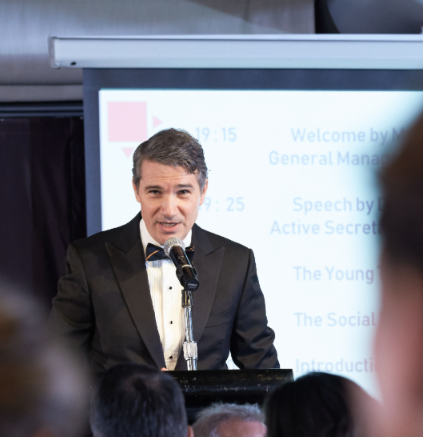
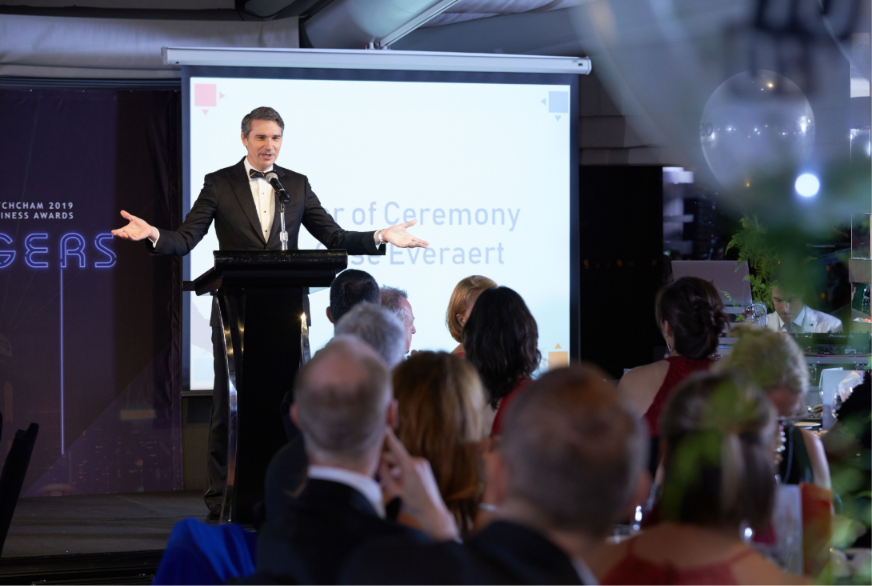
In 2011, I was invited to host the Dutch Business Awards Gala for the first time. Since then, I have had the privilege of hosting seven editions, in 2011, 2013, 2015, 2019, 2021, 2023 and most recently in 2025.
The Significance of the Gala
You have hosted the Dutch Business Awards Gala on seven occasions. What does the Gala mean to you personally, and what has been your most memorable experience?
For me, the Gala is first and foremost an opportunity to stay connected with the Dutch business community in Hong Kong. Because it takes place every two years, each edition develops its own character and creates a unique experience.
The event has also evolved significantly over time. Earlier editions tended to place greater emphasis on larger corporations operating in Hong Kong. Today, the Gala has become more thematic and entrepreneurial in nature, which feels particularly appropriate in a city like Hong Kong.
Without question, the most memorable edition was the 2021 Gala, which took place during the COVID-19 pandemic.
At the time, Hong Kong had temporarily relaxed social gathering restrictions, allowing events to take place with a limited attendance of 120 people. Rather than hosting a single event for 120 guests, we joined two rooms and welcomed approximately 240 guests at The Langham. The event sold out quickly because people had gone a long time without attending social gatherings. There was a genuine desire to reconnect.
Bernard Chan addressed the audience on behalf of the government, while Carrie Lam provided a video message for the Dutch community. The atmosphere throughout the evening was extraordinary, and no one seemed eager for it to end.
The celebrations were supposed to finish at 1 a.m. At approximately 1:15 a.m., I requested one final song from the band, Last Dance by Donna Summer. As the music played, everyone remained on the dance floor.
That moment perfectly captured the spirit of the evening. After nearly two years of isolation, the Gala provided a rare opportunity for people to celebrate together once again. It remains one of my fondest memories of the event.
The Gala's Changing Format
How has the Gala changed over time, and what stands out most from your years as MC?
The venue, theme, award categories and entertainment may vary from one edition to another, but the fundamental structure remains unchanged. Outstanding businesses and individuals are recognised across several categories, and the winners are invited to celebrate their achievements with the wider community.
Earlier editions featured more entertainment, games and performances. Over time, however, the format has become more streamlined, creating additional opportunities for members to network.
The Dutch business community in Hong Kong is relatively close-knit. Guests naturally want to move between tables, reconnect with familiar faces and establish new relationships. When too many activities were included in the programme, attendees sometimes felt they had insufficient time for meaningful conversations.
As a result, the emphasis has shifted towards creating the right balance between formal proceedings and informal interaction. Music and entertainment remain important elements of the evening, although the extensive post-event dancing that was once common has become less prominent.
Each Gala is also shaped by a unique theme. The 2019 edition, held at the Renaissance Hong Kong Harbour View Hotel, focused on "Changemakers", while the 2021 Gala adopted the theme "Back to the Future".
Ultimately, the key is not to over-programme the event. The Gala should create space for people to connect, communicate and celebrate success.
As MC, I pay close attention to the energy in the room and adjust my approach accordingly. I remember one occasion when the opening speeches ran longer than expected and guests had already begun eating and talking with one another.
Rather than delivering another lengthy explanation of the programme, I simply invited everyone to enjoy their dinner and promised to explain the next stage of the evening later. Responding to the mood of the room was more important than rigidly following the original script.
Timing is critical. The venue must serve dinner on schedule, and the organisers, hotel and production teams all work to an agreed running order. There is only limited flexibility, so keeping the programme on track is essential.
I always work from a script on my iPad. I do not memorise it because changes often need to be made throughout the evening. If the order of presentations or awards changes, the script can be updated immediately.
That preparation allows me to focus on the audience rather than worrying about what comes next. An MC should never dominate the event or attempt to become the main attraction.
The role of the MC is simply to ensure the evening runs smoothly and to give others the opportunity to shine. The winners, speakers and guests are the true stars of the event.
Traditions That Create Energy
Which Dutch Chamber events or traditions have been most effective in bringing members together?
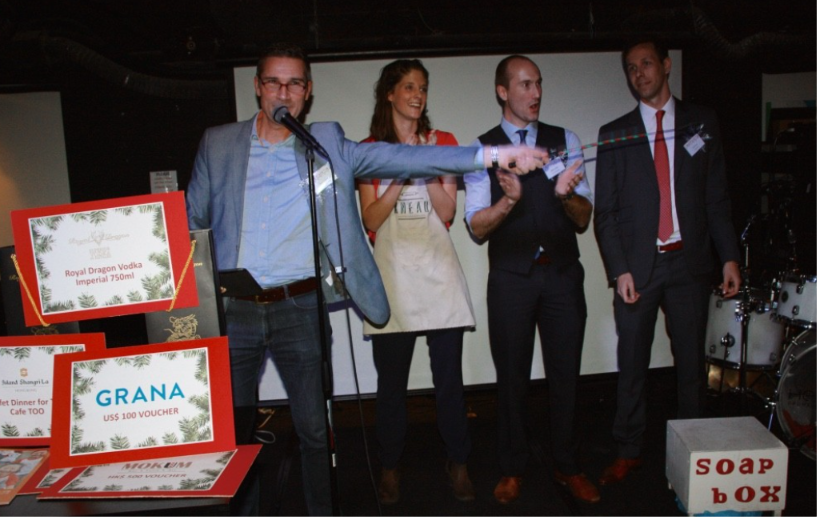
The Soapbox event has always been particularly effective. I introduced the Clap-O-Meter, a simple device used to measure audience applause and determine the winner.
Although I am no longer involved in organising the event, I still have a Clap-O-Meter at home. It is wonderful to see the tradition continue and to know that audience participation remains central to the competition.
The Gala auction has also generated tremendous energy, particularly when the proceeds support charitable causes. Depending on the year, this may take the form of a silent auction, a live auction or a raffle.
The live auction is especially engaging because it creates a sense of friendly competition. On one occasion, tables were named after Dutch cities, including Amsterdam, Rotterdam, The Hague and Klundert.
I could encourage bidding by announcing that Rotterdam had been outbid by Amsterdam and asking whether Rotterdam would accept that outcome. The tables would then compete enthusiastically, with all proceeds ultimately benefiting charity.
That said, auctions are not suitable for every Gala. They can be time-consuming, and challenges may arise if a sponsored item fails to reach its minimum bid. In such cases, a raffle is often a more practical alternative.
The Dutch Chamber's distinctly Dutch traditions are equally important. Events such as the Herring Party and the Mussel Party provide members with familiar food, a strong cultural connection and an enjoyable environment in which to meet and network.
A successful annual programme does not necessarily require a large number of events. A Herring Party, a Mussel party, a Gala and a Soapbox event already provide roughly one major gathering each quarter.
The Foundations of the Community
Looking back at the early days of the Dutch Business Association, what helped it grow into the Dutch Chamber we know today?
There were significantly more Dutch professionals living in Hong Kong in previous decades. Between approximately 2005 and 2015, the community was particularly active, closely connected and professionally engaged.
This was partly linked to Hong Kong's position as a leading financial centre, but the relationship extended far beyond finance. The Netherlands has a long trading tradition, and Hong Kong served as an important gateway for regional trade and trans-shipment.
Many Dutch professionals came to Hong Kong for sourcing and trading opportunities. They established businesses, joined the Dutch Chamber, built networks and benefited from a community that was willing to share experience and make introductions.
The community's strength stemmed not only from the presence of Dutch companies but also from the willingness of members to contribute.
People attended events, supported newcomers and made themselves available to help others. That combination of active participation, Hong Kong's commercial importance and a strong culture of mutual support played a crucial role in the Dutch Chamber's development.
The Dutch Chamber's Role in Hong Kong
How has the role of the Dutch Chamber evolved within Hong Kong's business community?
The Dutch Chamber has maintained a strong relationship with both the Hong Kong Government and the Consulate General of the Kingdom of the Netherlands. Its proximity to the Consulate is a considerable advantage, and the Consul General's willingness to host Dutch Chamber events at the official residence further strengthens those ties.
I cannot overstate how important the Consul General’s residence is in maintaining and strengthening connections with the wider Dutch community, and particularly with the Dutch business community. Every European that visits the house on The Peak laments that their country has let go of their residence.
The Netherlands is fortunate to have retained this exceptional place. It is much more than a residence. It provides a unique setting for bringing people together, fostering relationships, and showcasing Dutch trade, innovation, and international collaboration. It is a tremendous asset and one that is deeply appreciated by all who have the opportunity to experience it.
The Dutch have long been associated with international trade, innovation and the promotion of specialised expertise. The relationship between the Consulate and the business community helps support these objectives.
At the same time, the business landscape has changed considerably. In previous decades, multinational corporations such as Shell and Philips could establish large operations in Hong Kong and develop extensive business ecosystems around them.
Today, the market is more fragmented, with a growing number of smaller businesses and independent operators. In this environment, support from both the Consulate and the Dutch Chamber has become increasingly valuable, helping companies establish connections and navigate the local market.
The Dutch Chamber has also become more active in collaborating with other business chambers. As individual business communities have become smaller, joint events provide valuable opportunities for networking and knowledge-sharing.
Other chambers are often keen to work with the Dutch Chamber because of its active membership, positive energy and collaborative mindset. That openness reflects the broader role the Netherlands often plays within the European business community.
Looking Towards the Future
As the Dutch Chamber celebrates its 35th anniversary, what do you hope it will continue to offer its members?
That it keeps up its traditions of galas, soapboxes, herring and mussel parties, and hosting events at the residence. Maintaining traditions takes a lot of effort. I hope the Dutch Chamber will be able to maintain these traditions.
I also hope the Dutch Chamber continues to promote a positive and constructive relationship between Hong Kong and the Netherlands, while also supporting the broader connection between China and the Netherlands.
It should continue creating opportunities for people to meet, supporting businesses of all sizes and strengthening the relationships that connect our two communities.
The combination of practical business support, cultural traditions and a welcoming community is what makes the Dutch Chamber so valuable. Preserving that balance will help ensure it remains relevant and meaningful for members in the years ahead.